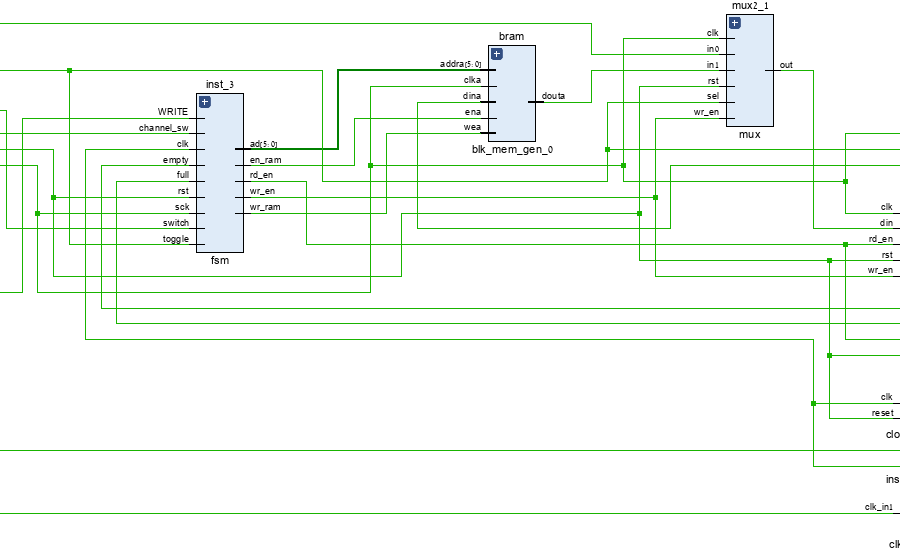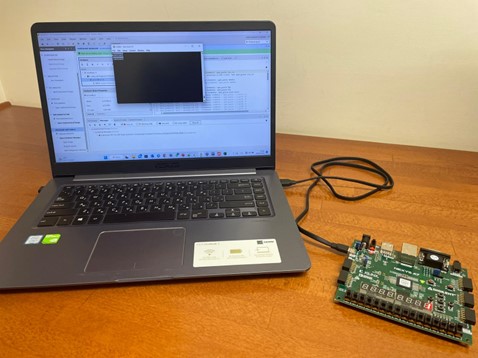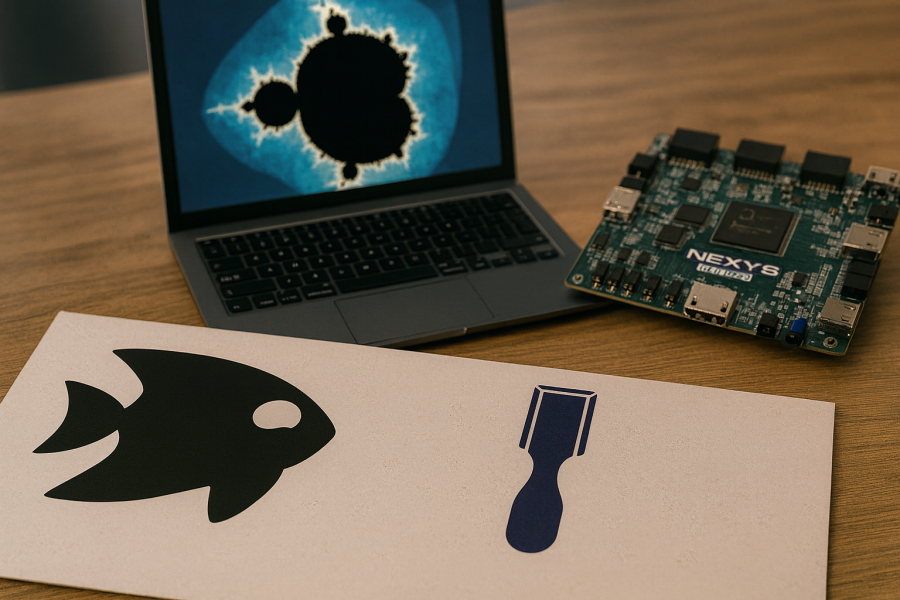
• This project re-implements a baseline SystemVerilog Mandelbrot renderer in Chisel and Spade, targeting the Digilent Nexys Video FPGA, and compares the approaches on resource usage, timing, and code size. The work includes an SDL/Verilator preview path and a full DVI/TMDS pipeline on hardware.
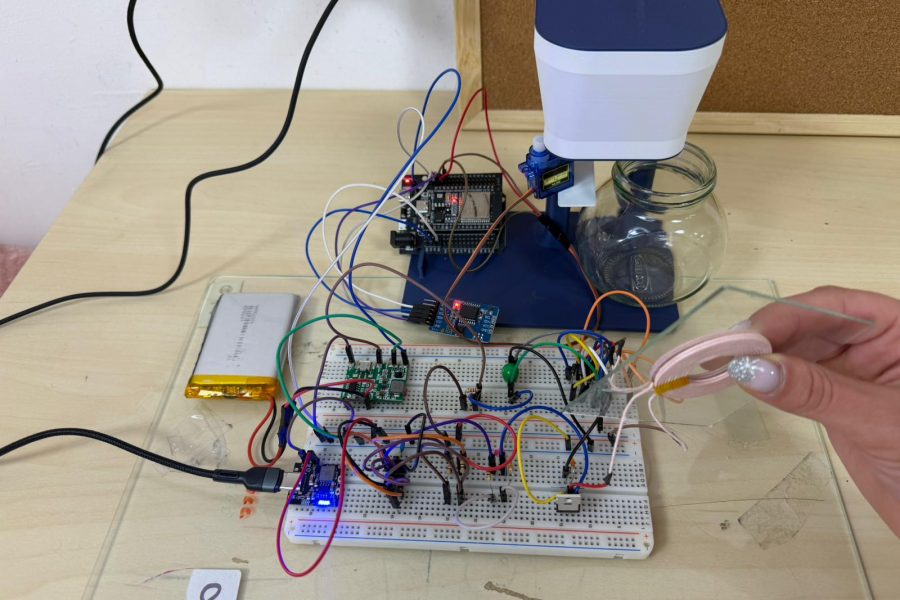
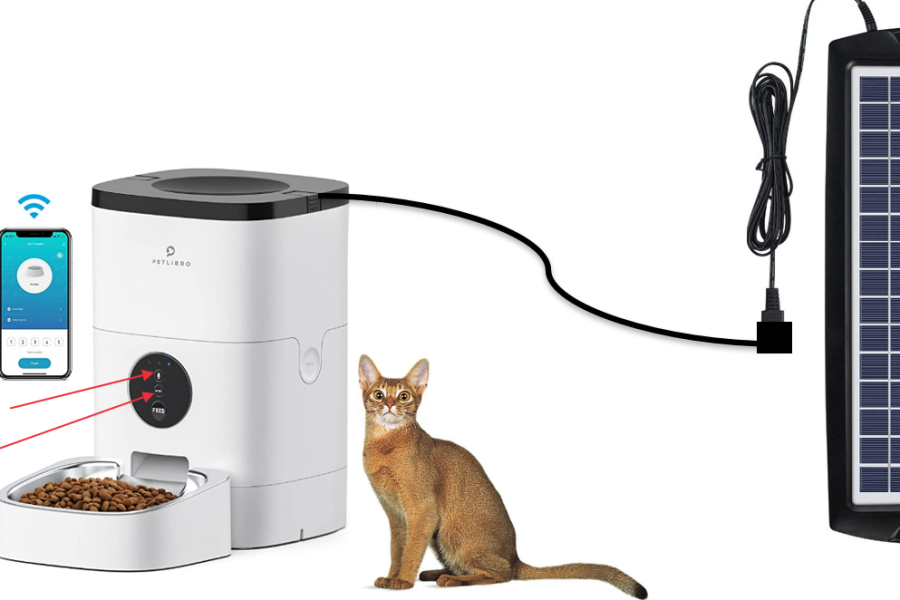
  • This project presents a wireless-controlled smart fish feeder that enables automated feeding without external wiring using wireless power transfer and an ESP32 controller.
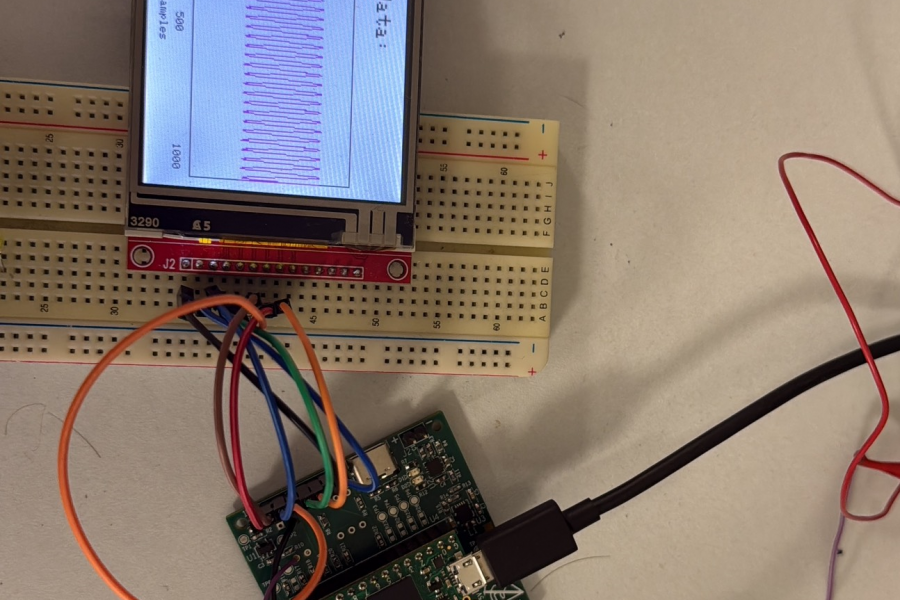
  • A portable spectrometer imager based on the C12880MA sensor, using Teensy 4.0 with high-speed DMA ADC sampling and a TFT display for real-time waveform visualization.
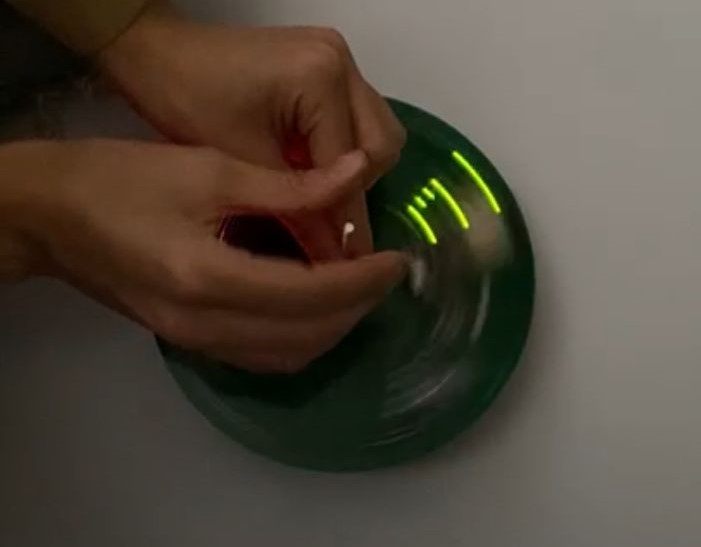
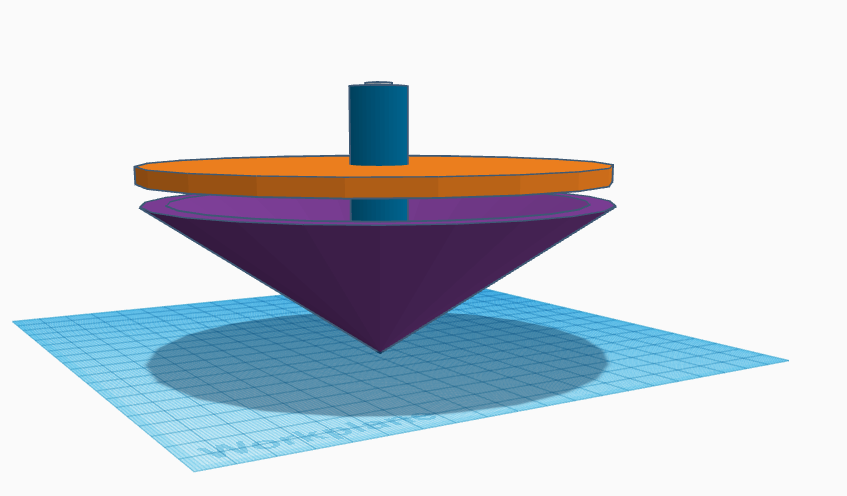
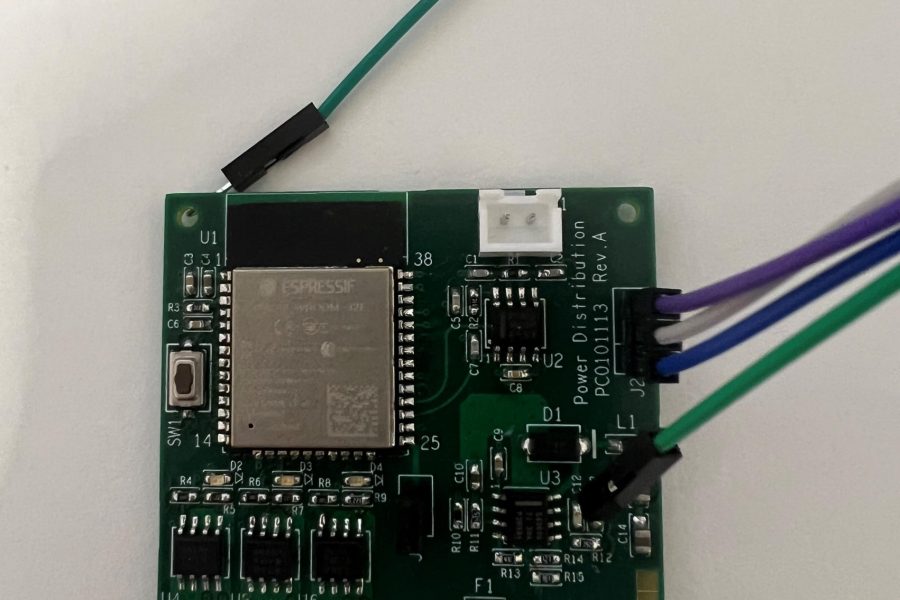
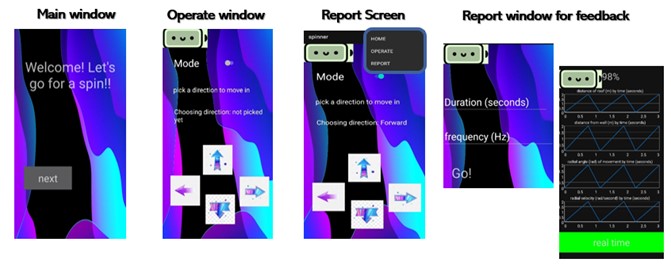
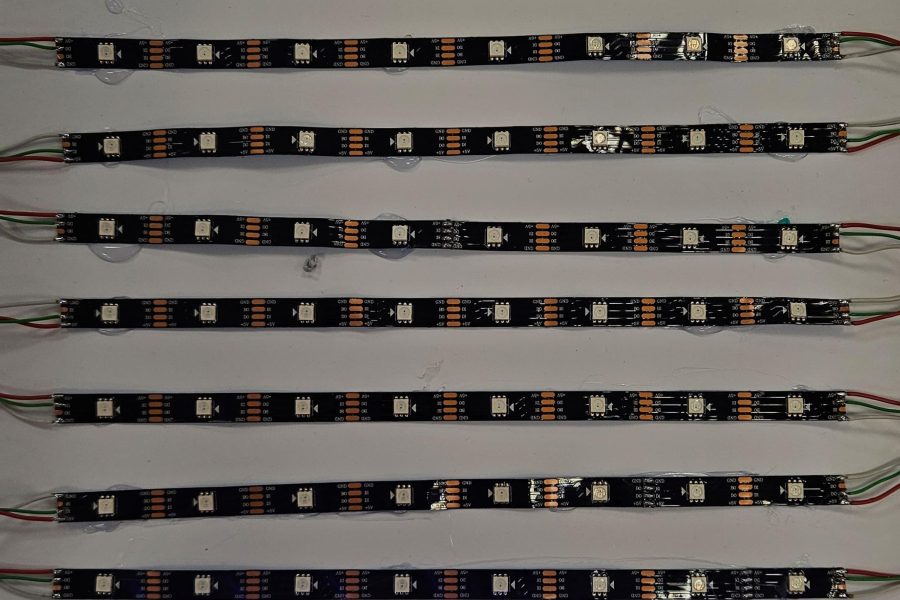
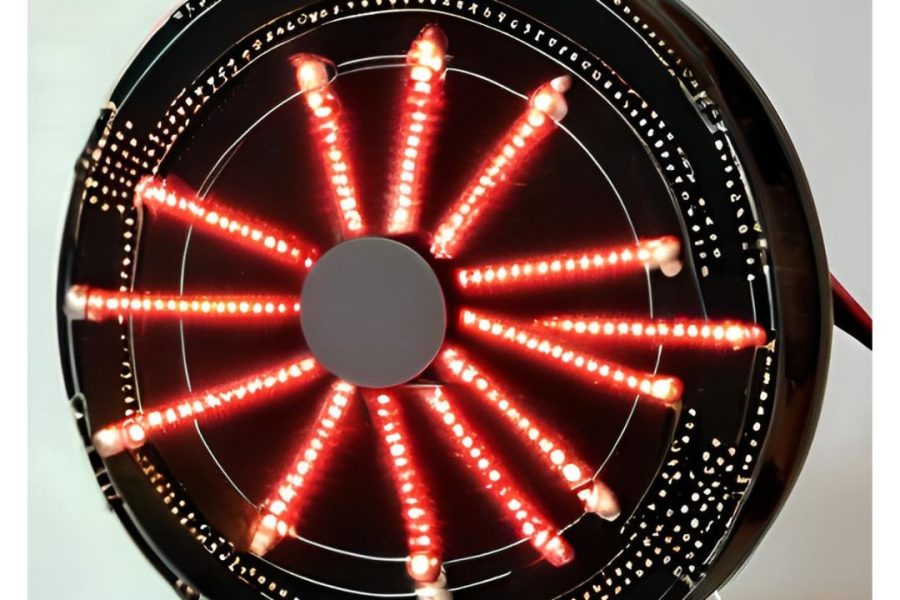
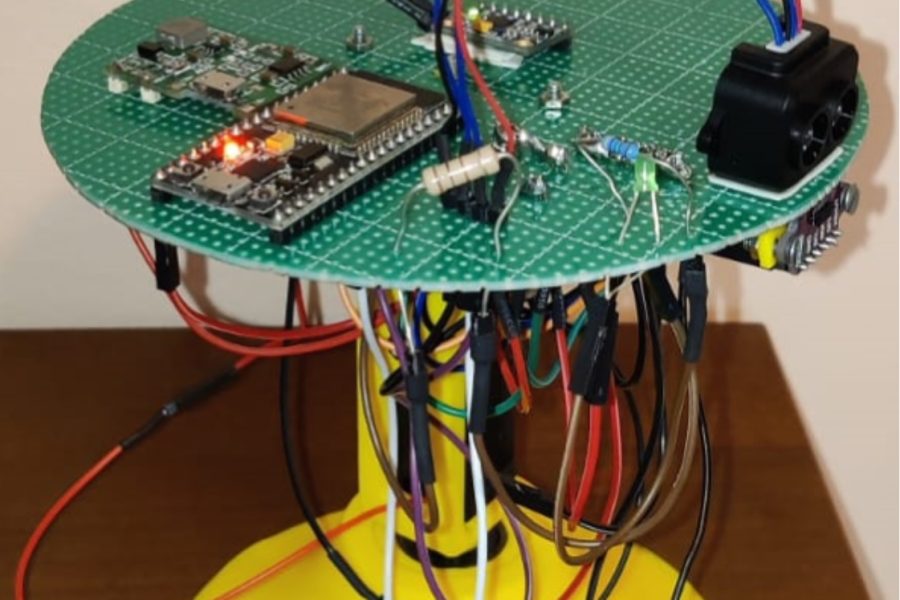
  • The smart spinning top system integrates mechanical, electrical, and software components to achieve precise real-time control. Key achievements include stable rotation, a high-speed hammer mechanism operating at 50 Hz, dual-core processing, and interactive LED array while everything controlled by custom android app. The project demonstrates a successful multidisciplinary approach, combining hardware, software, and mechanical design into a fully functional electromechanical system.
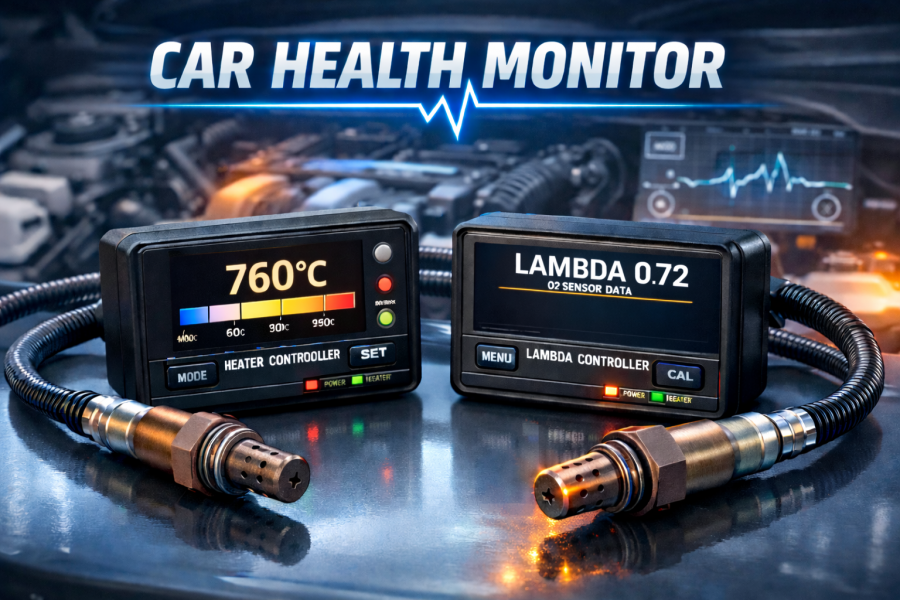
  • This project aims to design a low-cost wideband oxygen-sensor controller for accurate lambda measurement. The system regulates heater temperature and maintains the Nernst cell voltage at 450 mV using a pump-current loop. The required pump current is measured to determine lambda.
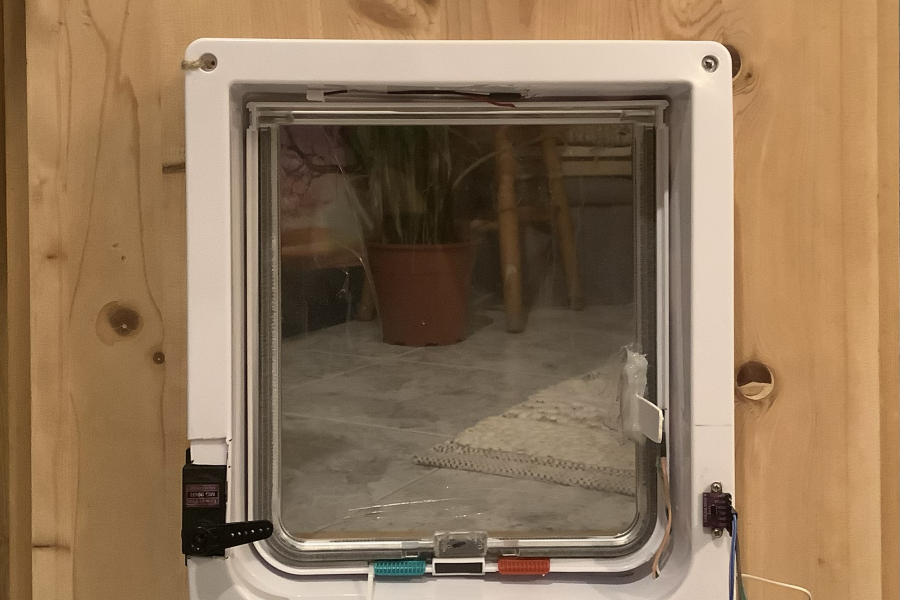
  • The RFID Cat Door project presents an ESP32-based smart cat door that uses 125 kHz RFID technology to grant entry only to authorized pets wearing EM4100-compatible tags. By designing a custom 25.4 × 25.4 cm antenna and optimizing the LC resonant tank, the system achieves a 10 cm read range, significantly extending the 2.5-4 cm range of commercial LF RFID readers. The door automatically unlocks for tagged cats entering and...
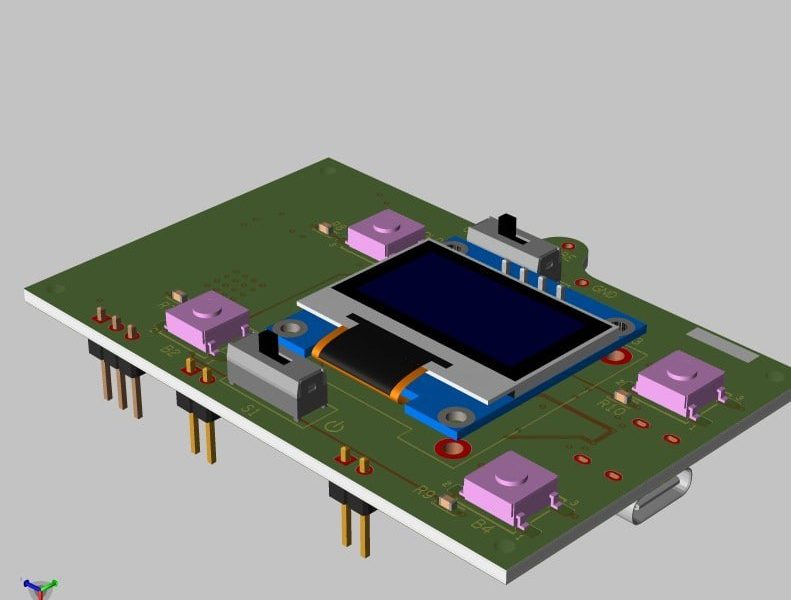
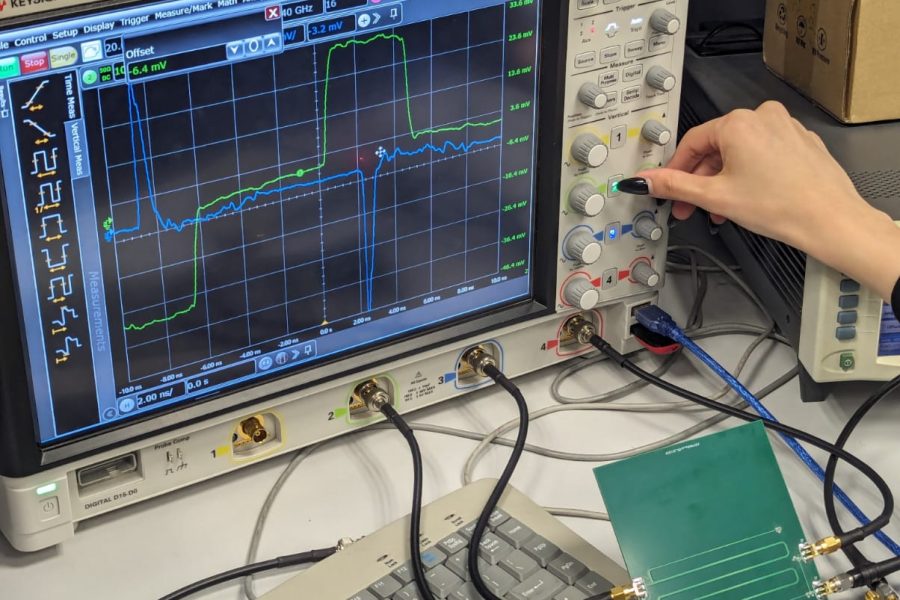
  • A handheld oscilloscope built on the ESP32, providing low-cost real-time visualization of low-frequency signals.
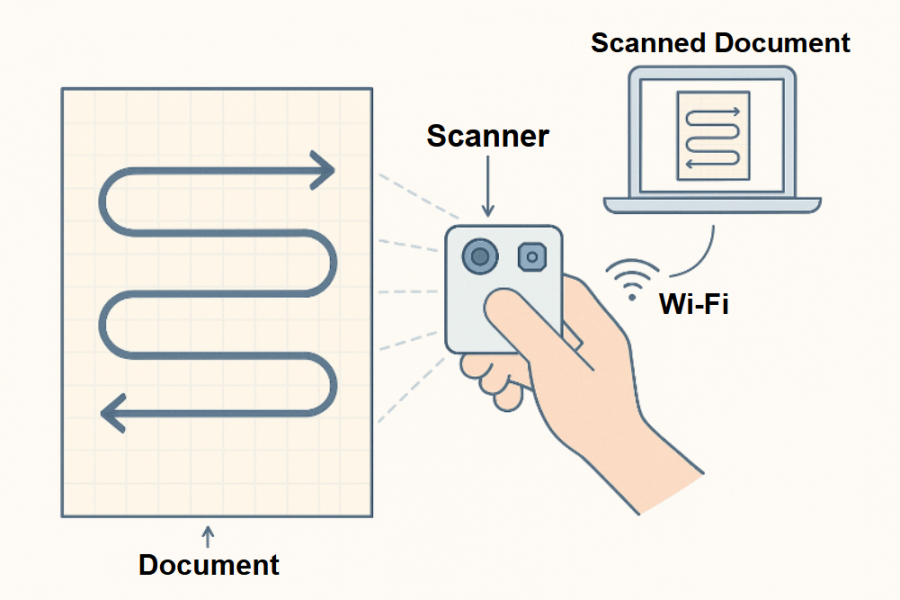
  • Hand-held, sensor-guided mini document scanner that digitizes documents. An ESP32-CAM with distance and motion sensors captures overlapping images and streams them to a host computer, which reconstructs them into a single stitched document.
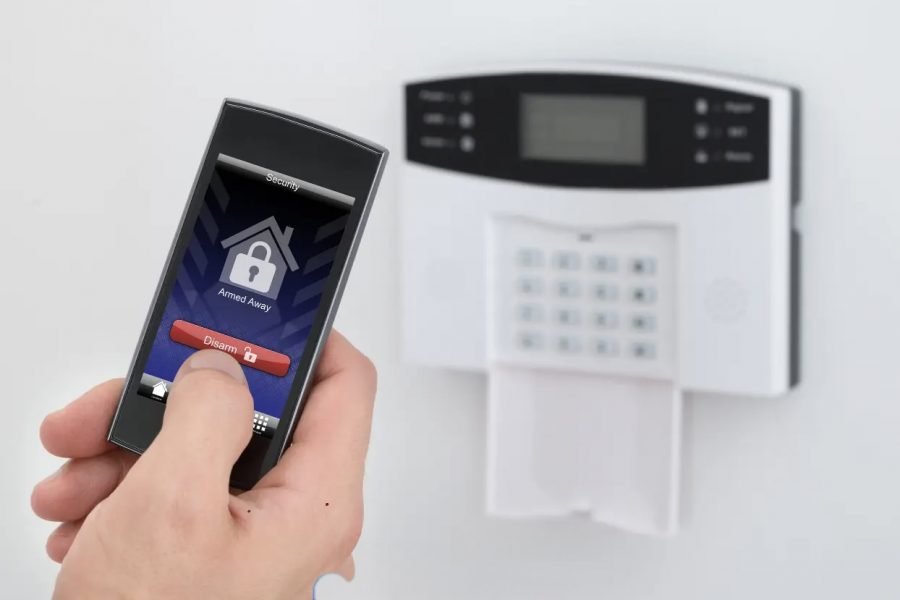
  • Project presents a modular IoT control system that integrates ESP32 microcontrollers with Wi-Fi and LoRa communication to enable real-time monitoring, long-range control, and reliable alert transmission. It provides a flexible, low-cost, and scalable platform for remote security management through an intuitive web-based interface.
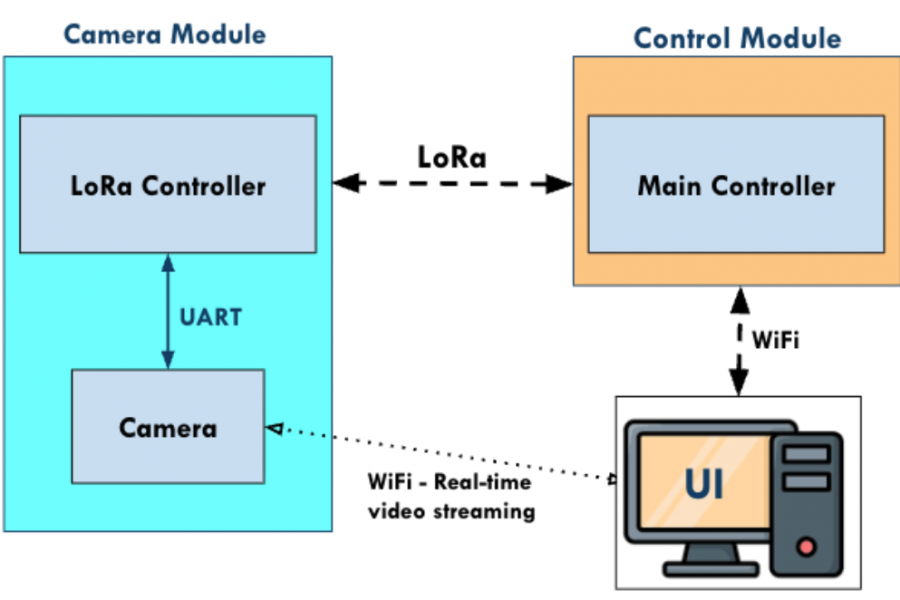
  • The project presents a modular alarm system using ESP32, LoRa communication, and a camera module to detect events and send real-time alerts. It focuses on achieving low power consumption, long-range connectivity, and cost efficiency.
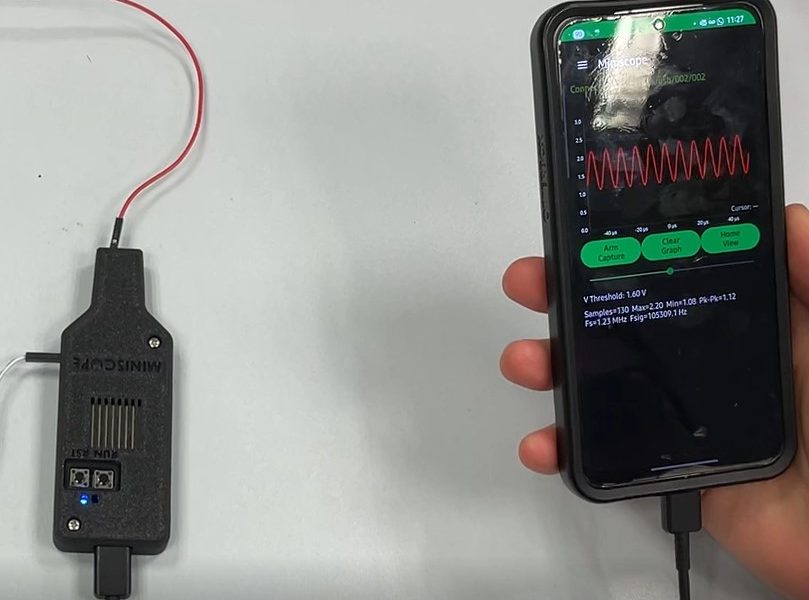
  • A low-cost, hand-held, and easy-to-use oscilloscope capable of acquiring different signals of a typical microcontroller system, with waveform visualization displayed directly on an Android phone.
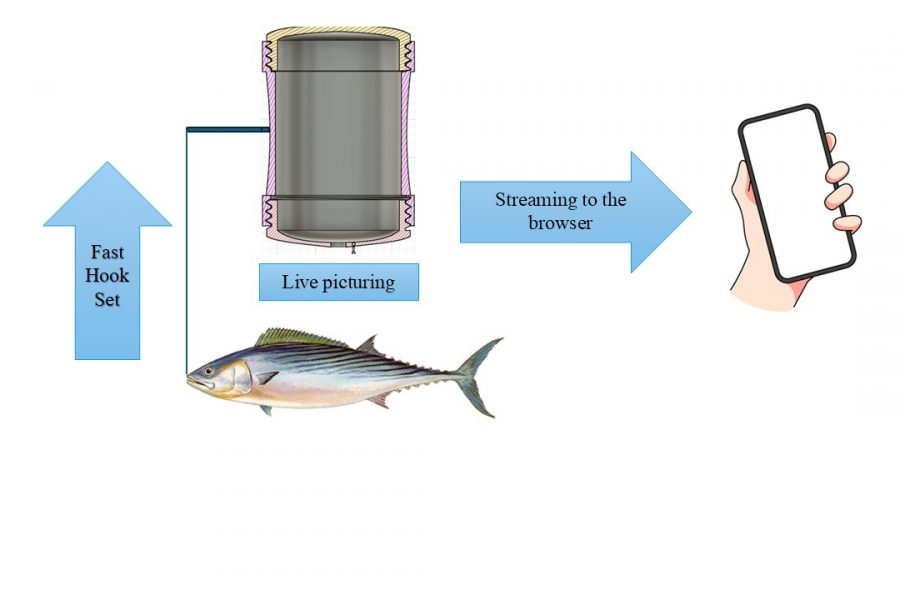
  • The project developed a smart fishing buoy that integrates an ESP32-based control system with motion sensing, camera monitoring, and a servo-driven hook mechanism to reliably detect and respond to fish bites while distinguishing them from wave motion.
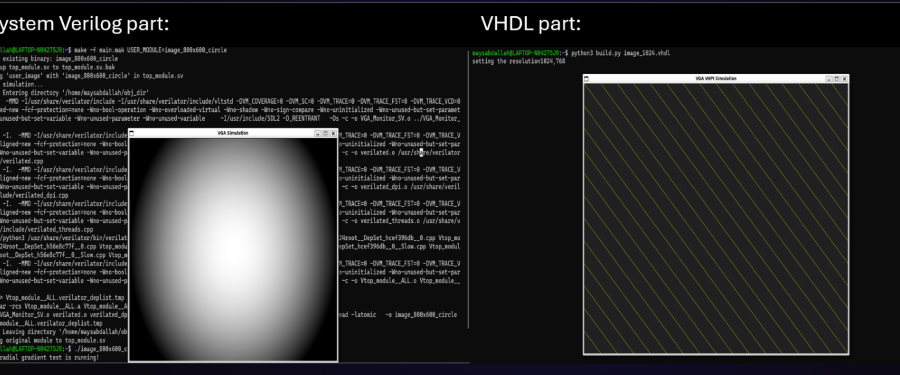
  • The VGA Monitor Simulation project replaces physical VGA hardware with a software-based solution using VHDL, System Verilog, and C++ (SDL2). By generating and rendering VGA signals in simulation, it provides a flexible, low-cost platform for testing, education, and digital design prototyping.
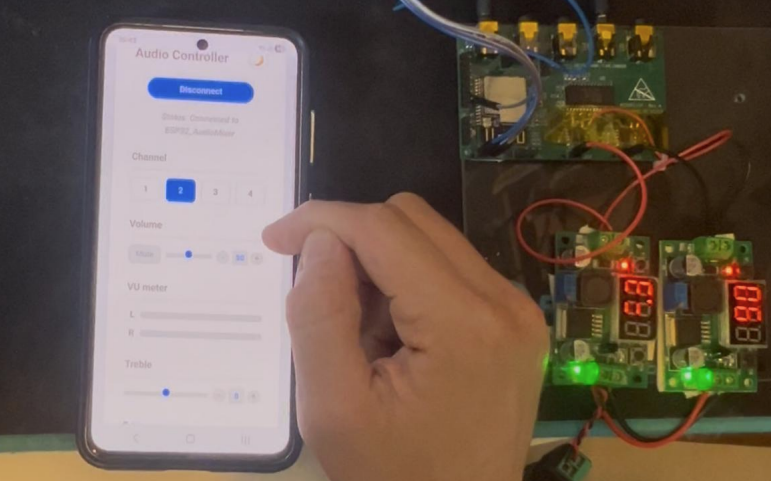
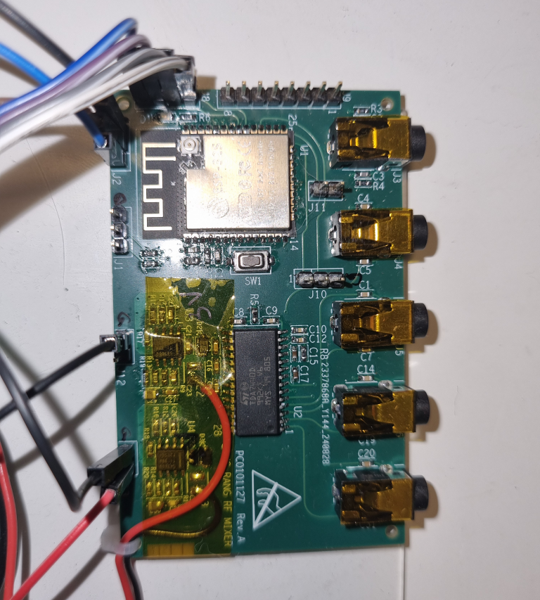
  • Transformation of a hardware audio mixer into a modern, user-friendly system, using a web application and Bluetooth Low Energy for real-time remote control and audio level feedback from any standard device.
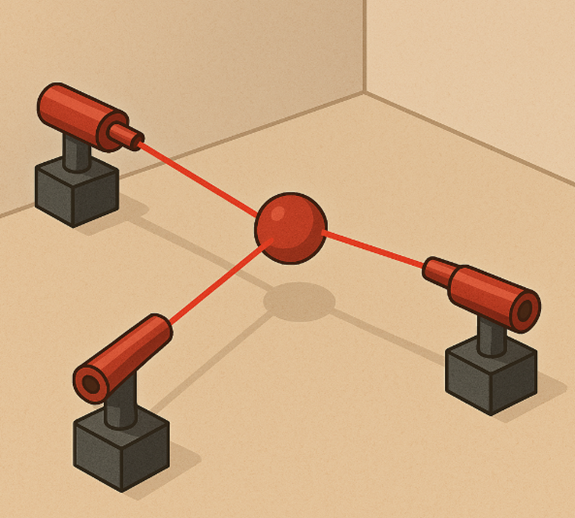
  • The project presents a laser-based indoor localization system designed to overcome the limitations of GPS in enclosed environments. By deploying three ESP32-driven scanning stations with rotating laser sensors, the system achieves precise object positioning through wireless communication and triangulation.
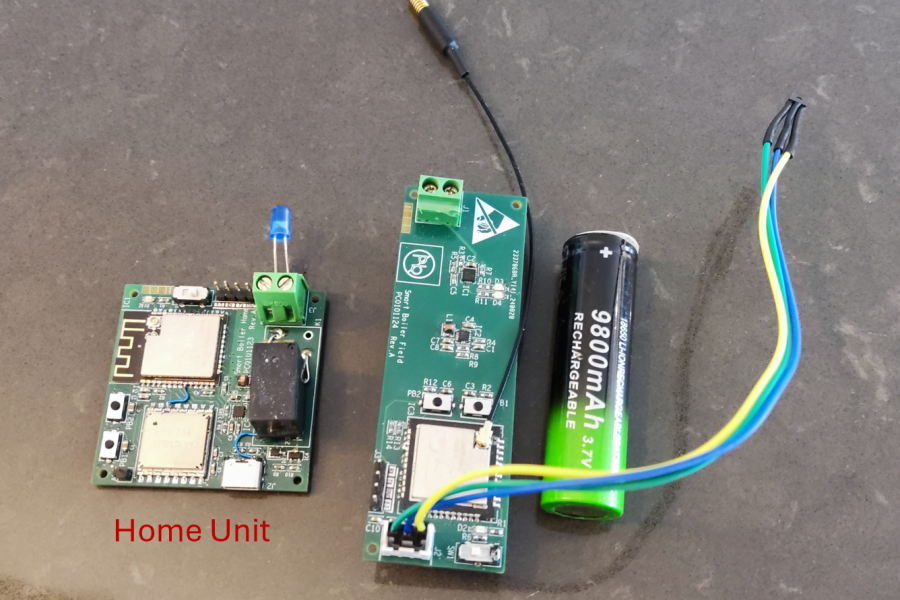
  • Smart Boiler is a two-part system that monitors and predicts hot water availability while optimizing energy usage. It integrates a LoRa-connected field unit at the boiler with a home unit inside the house, supported by a machine learning heating-time predictor and a usage predictor, which predicts when the next shower is expected, and alerts the user if turning on the boiler is necessary to ensure sufficient hot water.
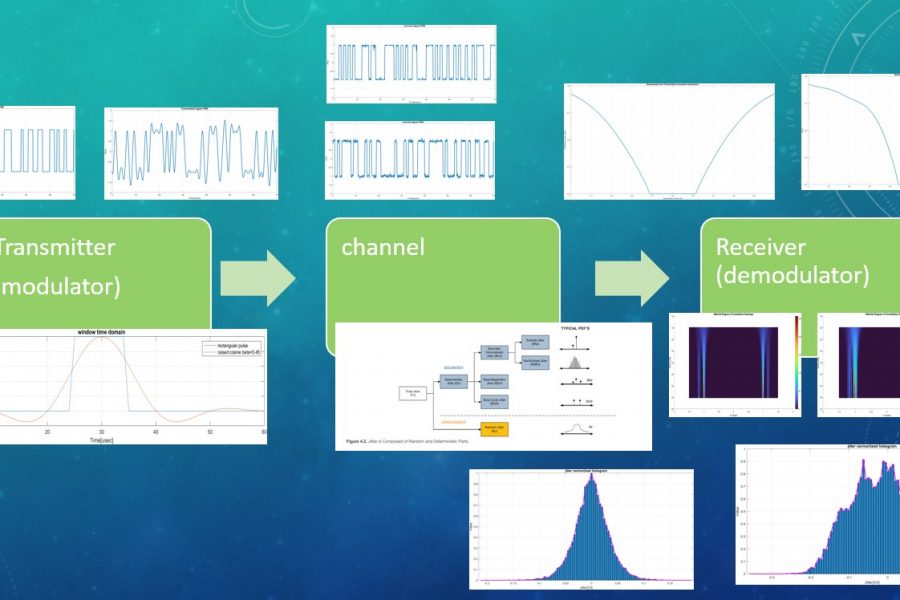
  • A MATLAB-based project designed to simulate digital signal transmission in the presence of impairments. The goal is to understand and characterize the effects of these impairments on signal integrity. The final product is a generic application that allows users to modify various transmission parameters and observe their impact at the receiver through selected diagrams and figures of merit (FOMs)
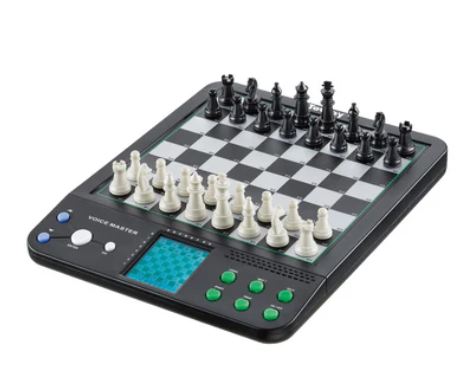
  • The project introduces a cost-effective electrical chessboard that detects piece positions in real time using magnetic field sensors. This non-optical approach allows scalable tracking across the entire board. The system supports future enhancements such as wireless connectivity and AI analysis.
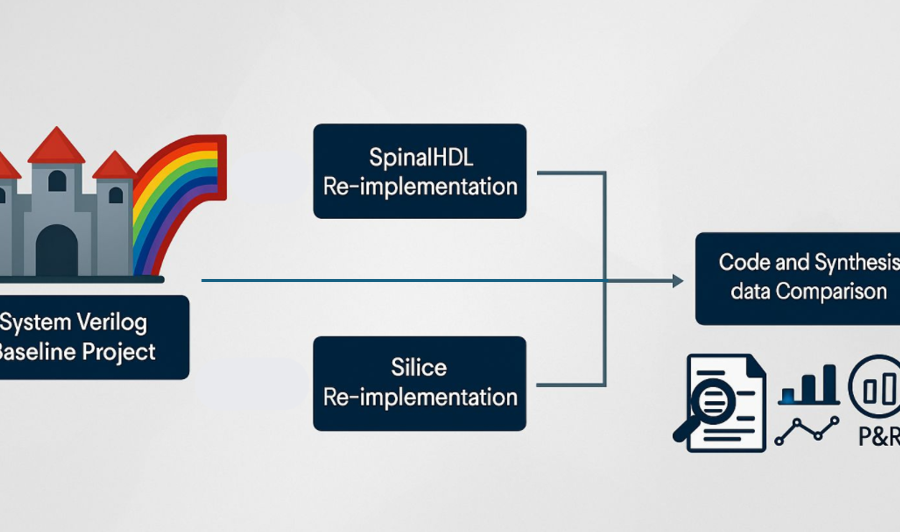
  • This project converts a SystemVerilog implementation of Castle Drawing to Silice and SpinalHDL, which are high level hardware description languages. It showcases the capabilities of Silice and SpinalHDL, compares it with SystemVerilog in terms of readability, and performance and provides feedback for language improvement.
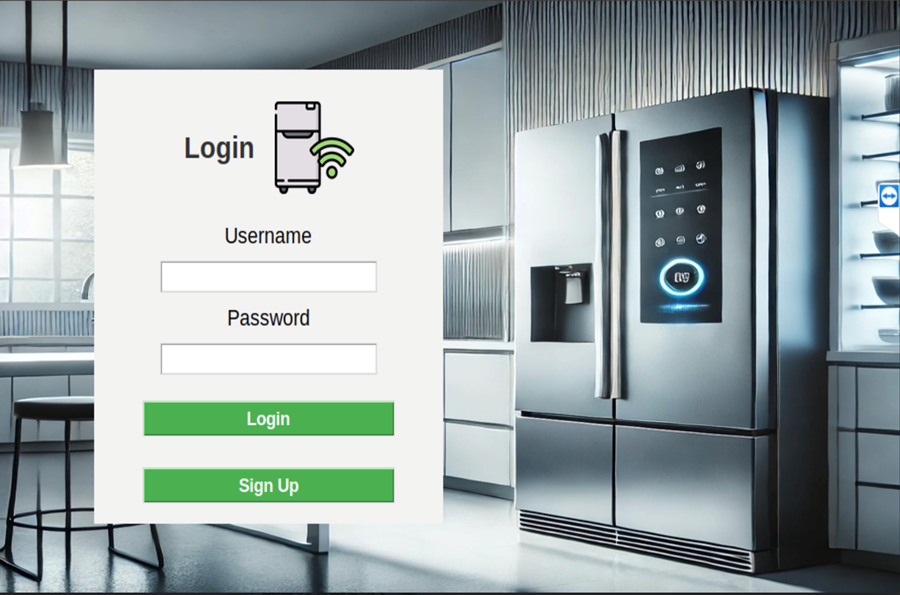
  • The project presents a smart refrigerator system that combines camera-based item detection, a touchscreen interface, and a mobile app. It uses AWS cloud services to enable secure data storage, real-time synchronization, and remote user interaction. The system bridges local and mobile platforms for seamless grocery management.
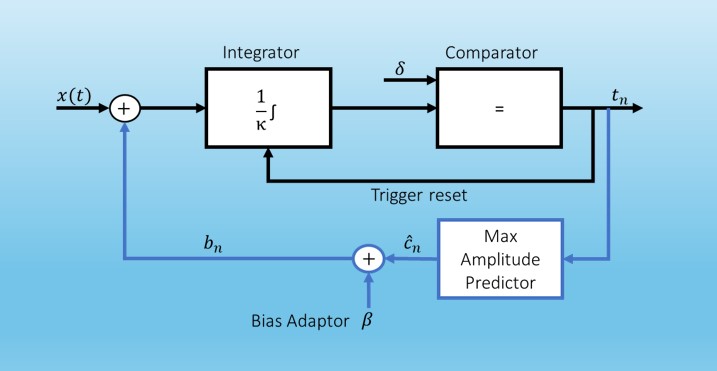
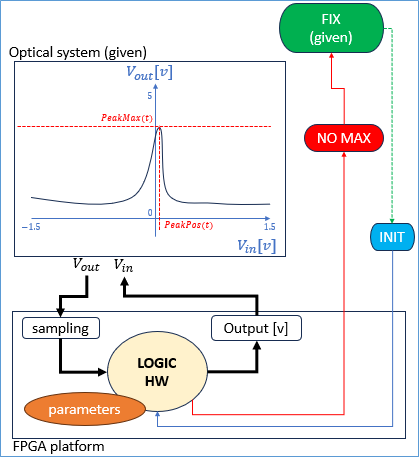
  • Implementation of an adaptive asynchronous signal sampler, which changes the bias of the signal in real time. The project is based on a special sampling algorithm and improves the regular one by reducing the number of samples without losing information.
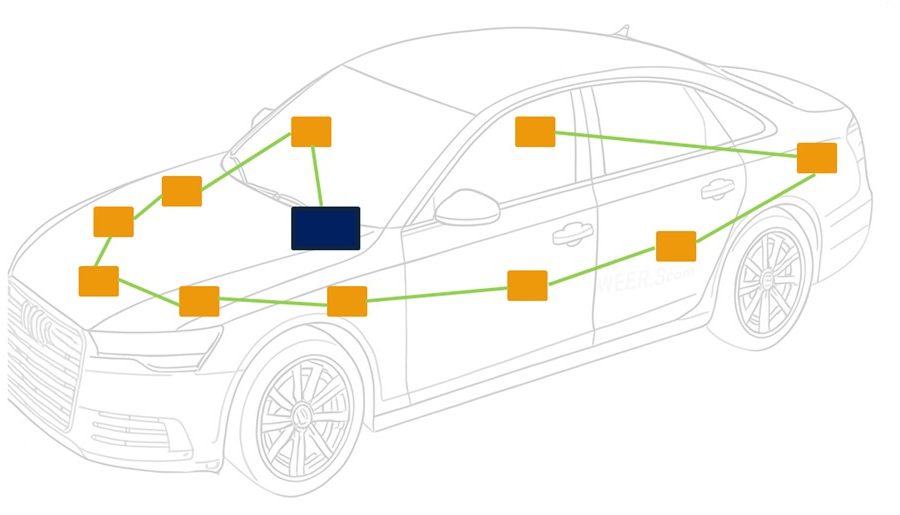
  • Today’s vehicles use extensive wiring and a central fuse box to power electrical components. This project introduces a compact CAN BUS module with smart fuses to cut wiring, boost efficiency, and improve vehicle design.
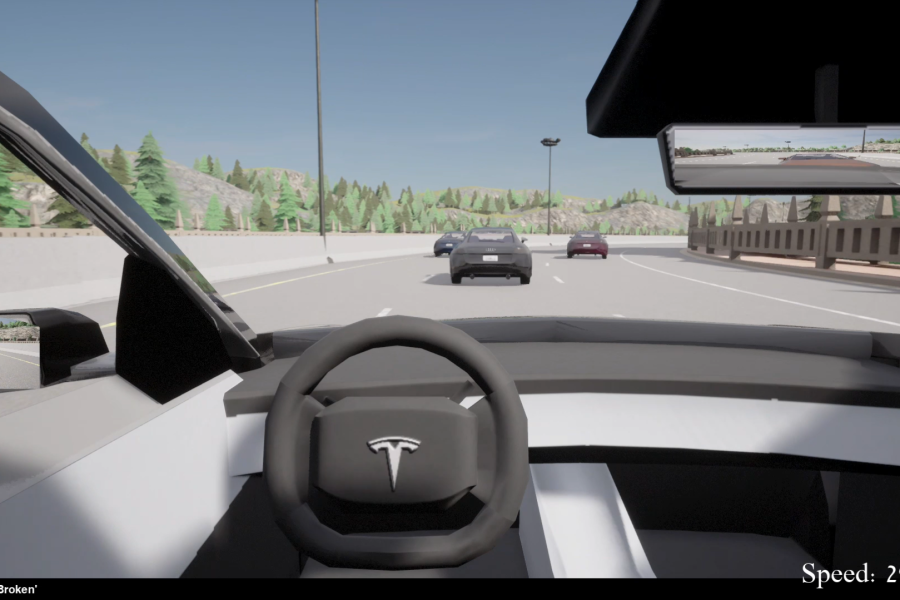
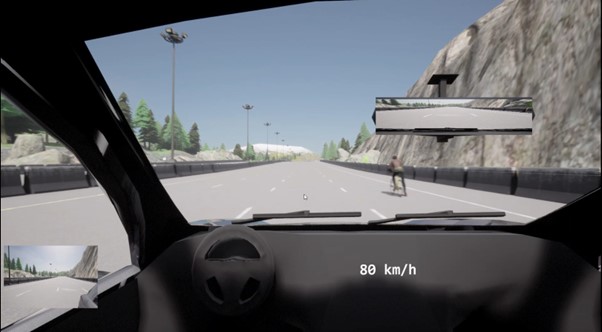
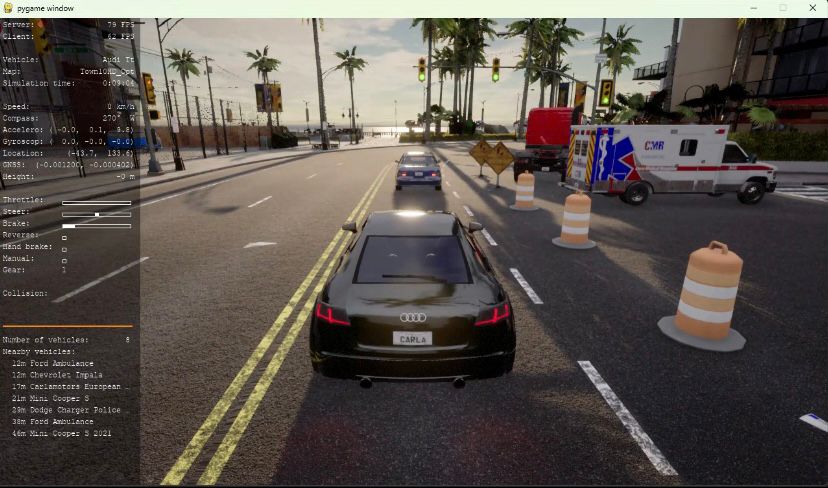
  • A smart driving simulator using CARLA and a Logitech G920 steering wheel trains drivers through realistic scenarios, real-time feedback, and crash playback to help correct common driving mistakes and improve road safety.
  • The project utilizes the Carla simulator and a racing wheel to create a platform that aimes to check the hypothesis that drivers unconsciously swerve toward roadside obstacles due to diverted attention.
  • Computerized Stroboscope using an ESP32-CAM to capture and stream images via a web interface. The camera’s flashing, adjustable via an app, creates a stroboscopic effect for motion analysis. This system integrates IoT and real-time imaging for interactive visualization.
  • Personalized driver training system using the CARLA simulator. By analyzing a driver’s profile, which includes the driver’s common mistakes, the system generates tailored driving lessons that simulate realistic scenarios, helping drivers recognize and correct their weaknesses through practical experience and replay-based feedback.
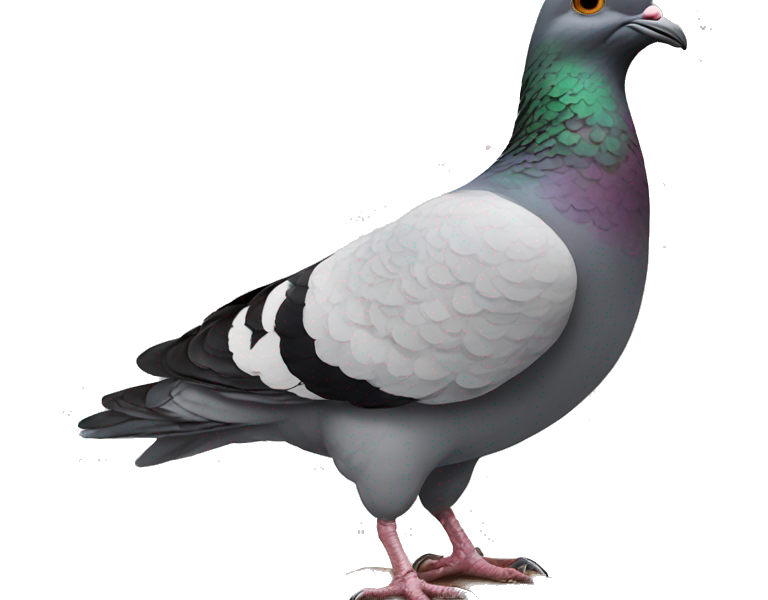
  • The "Dove Chaser" system autonomously detects pigeons, tracks them, and sprays water to deter them. Key achievements include effective 360° tracking, energy-efficient operation, and improved detection up to 2 meters. The project demonstrates a practical, humane solution to pigeon nuisance, blending advanced technology and real-world applications.
  • Developןמע a low-cost barcode checker device to prevent mismanagement of patient samples through accurate labeling with unique barcodes.
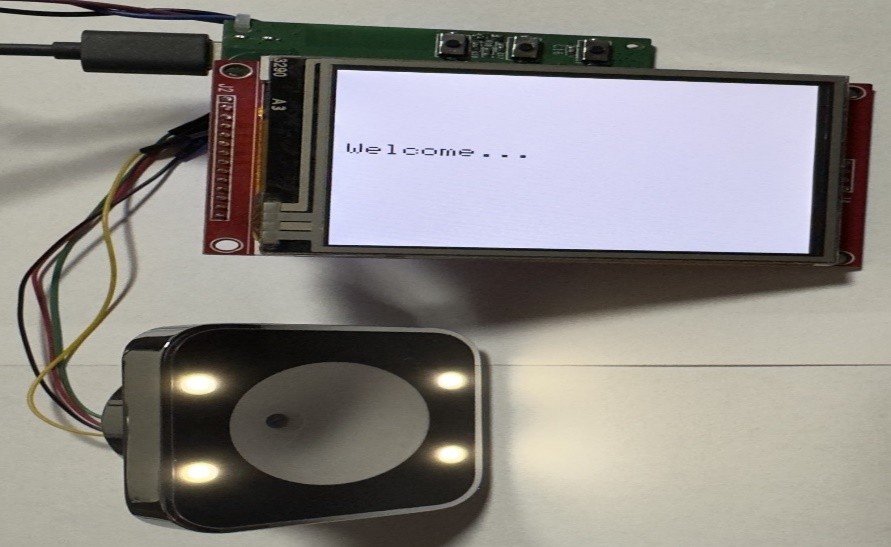
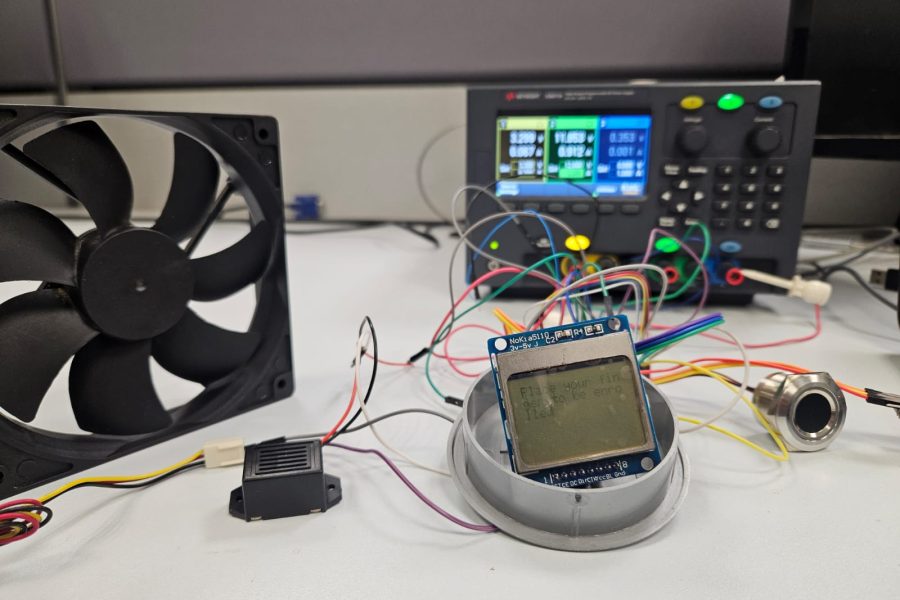
  • The Smart Door Lock system integrates an ESP32 microcontroller, fingerprint sensor, and LCD display to enhance security and convenience. This system allows users to enroll and verify fingerprints, stores data securely on a server, and provides access notifications via a user-friendly interface. Power loss resilience and modular design make it a practical solution for modern access control.
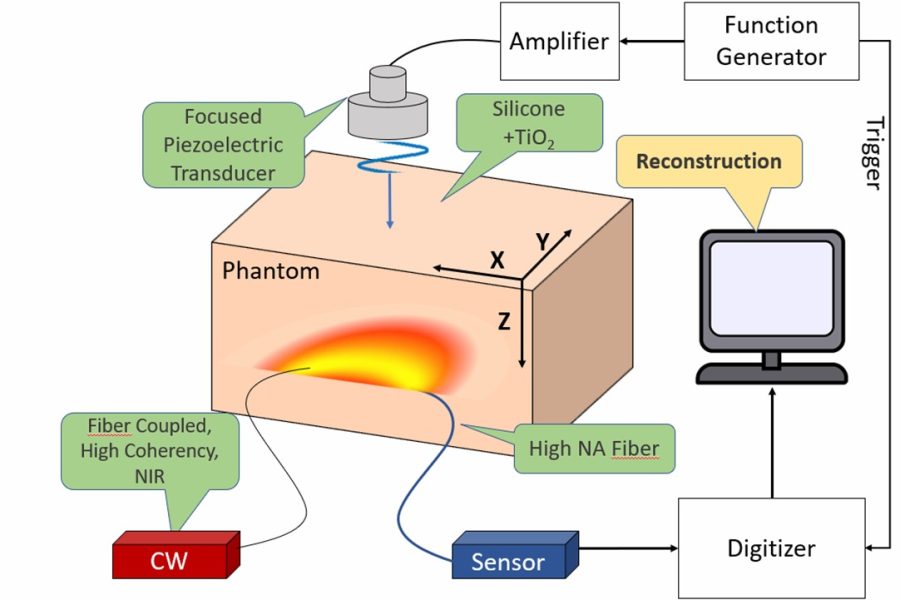
  • An acousto-optic imaging (AOI) algorithm for real-time deep tissue imaging is implemented, transitioning from MATLAB to hardware-compatible C code to meet real-time processing and resource constraints. By optimizing computational efficiency and managing high data flow rates, the validated implementation accurately reconstructs tissue layers and demonstrates its feasibility for future AOI systems.
  • A modular smart home system component that sends notifications when a door is opened and wirelessly transmits battery status.
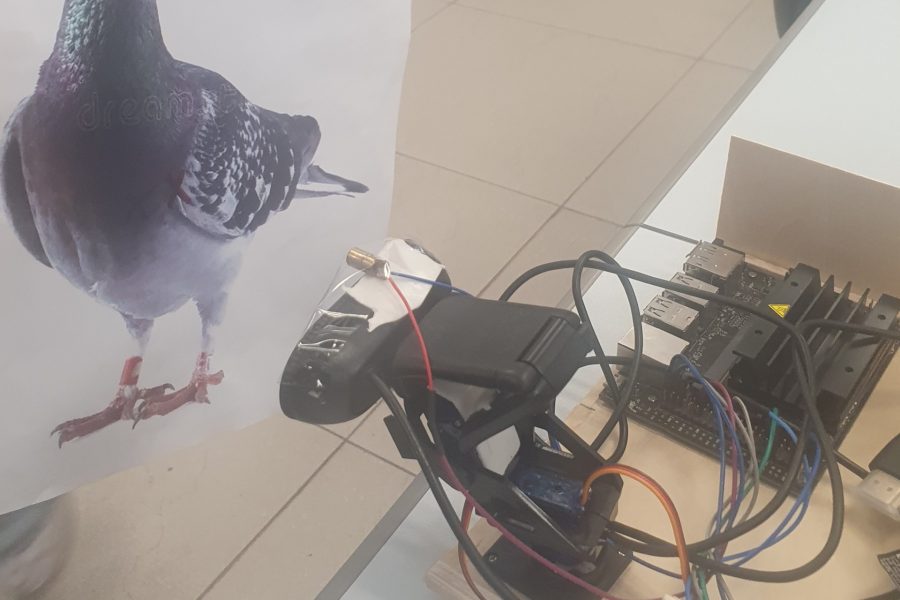
  • This project aims to develop an automated system for detecting and deterring doves in urban environments using computer vision and laser technology. The system employs an ESP32-based camera module with YOLO object detection to identify doves, and uses servo motors and a laser pointer to track and harmlessly encourage the birds to relocate, addressing the challenges of dove-related health risks and property damage in a humane manner.
  • Creation of a low-power and efficient feeding system that designed for community cats, while ensuring that other wildlife can't access the food.
  • Developing an automatic bird repellent system that utilizes AI detection algorithms to identify pigeons, employs motor sensors to position the device, and activates a water jet to deter them.
  • An adaptive sampler using the IF-TEM method. This method allows for low-energy, asynchronous sampling by sampling only when the input signal changes. The project involves circuit design, PCB integration, and system validation through testing.
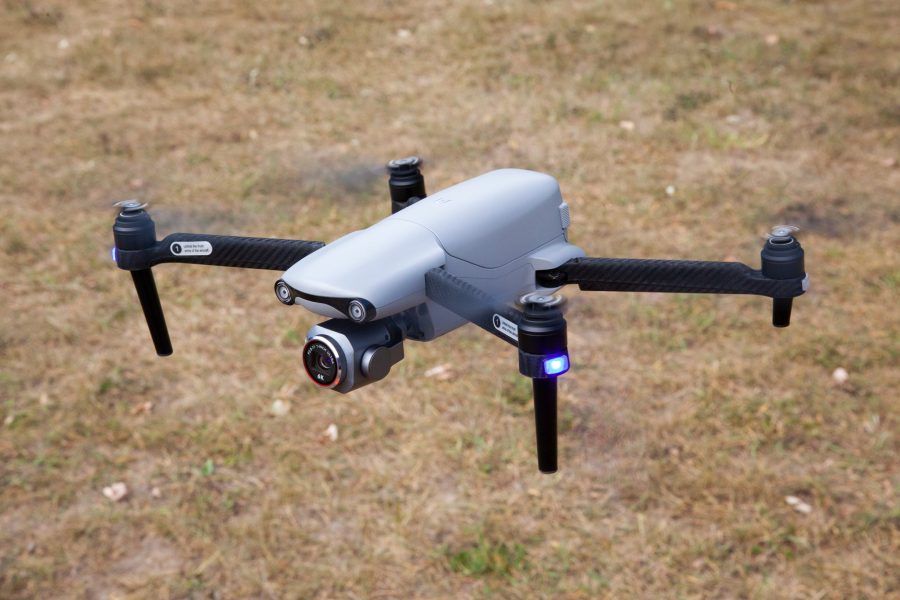
  • Designing and developing an advanced drone for conducting precise surveys and measurements of agricultural fields. Project goals include developing an advanced measurement system to store spectral data, maintaining accuracy and reliability. Key challenges include designing a small and user-friendly device, precise voltage conversion, and effective integration of the ESP32 system.
  • In this study, the focus is on analyzing data-center workloads on AWS. The investigation encompasses both Intel and ARM architectures, with a detailed exploration of performance metrics. These metrics include thread count, memory bandwidth, and the number of vCPUs. The benchmarks used for this analysis are STREAM, Multiload, and Sysbench. This comprehensive examination provides valuable insights into the performance and efficiency of different architectures under various workloads.
  • Using Jetson Nano, this pigeon-deterrent system detects pigeons via a webcam, controlling servo motors and a laser pointer.
  • The Magic dreidel is a unique spinning top that allows the user to control its movement direction and rotation. A past hardware groups developed the design for this device.
  • Development and testing of a Tetris game on an Arduino using an LED strip and button interface. It integrates hardware and software to create a responsive game, handling piece generation, movement, collision detection, and scoring.
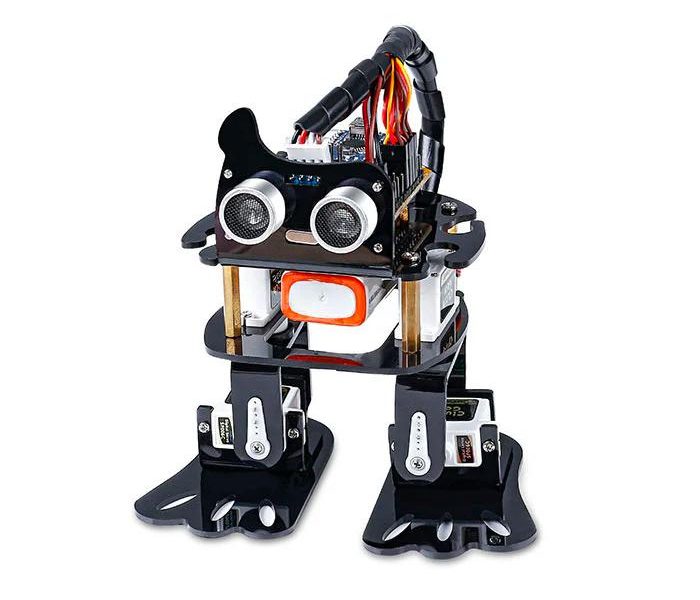
  • The project is based on a robot called Sloth, developed by SunFounder. Sloth can move forward and detect the range to make a turn when encountering an obstacle.
  • Aimed to detect the angle of a spinning top using ESP32 and wireless communication for debugging the results. The implementation involved developing an algorithm to accurately determine the right timing for turning LEDs on in several angles.
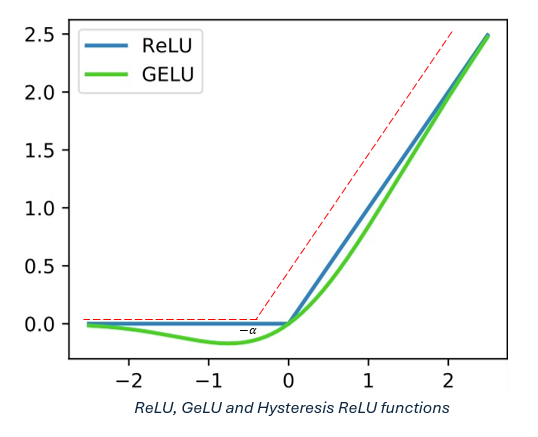
  • The project focuses on investigating common activation functions, specifically ReLU and GeLU, and examines the advantages and disadvantages of each. As part of the project, the ReLU function was implemented on the PYNQ Z2 board by creating an overlay in the Vivado environment.
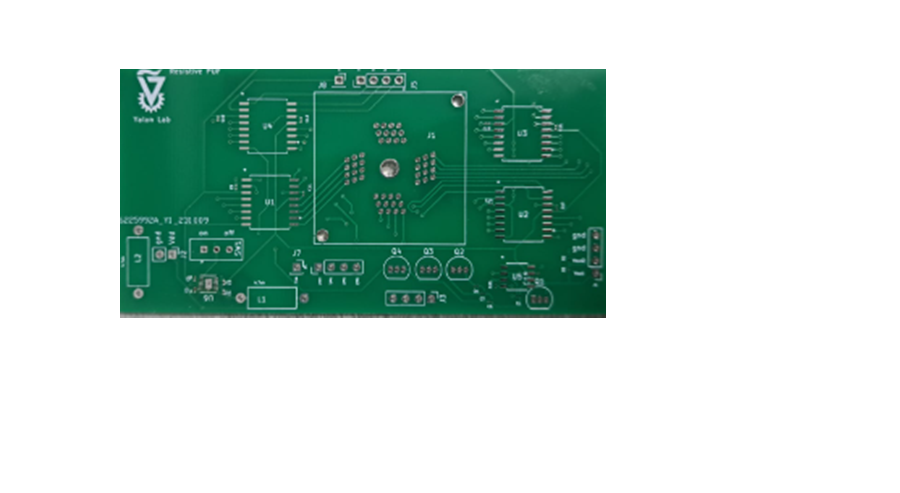
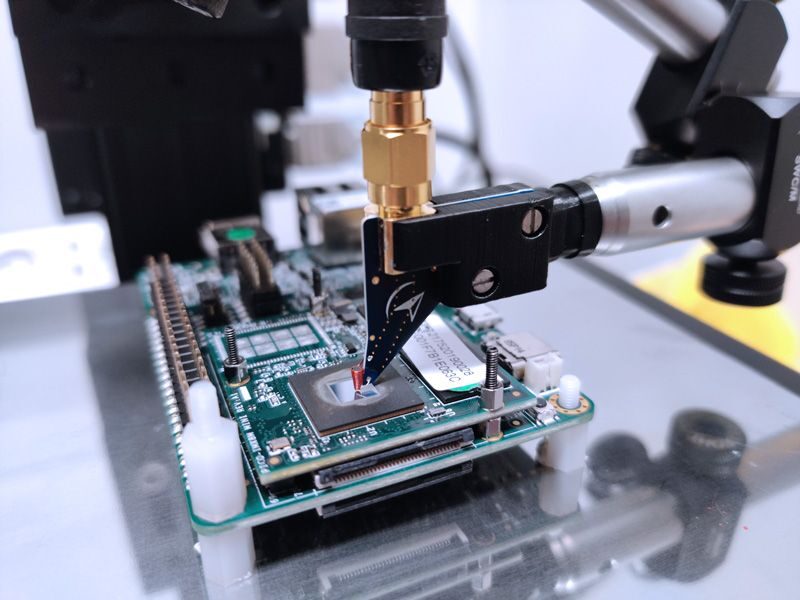
  • The aim of the project is to implement a measurement system of a resistive physically unclonable function, The system is uses a PCB with a current measurement circuit and analog mux's for pin selection. The measurement is controlled by a GUI written in python.
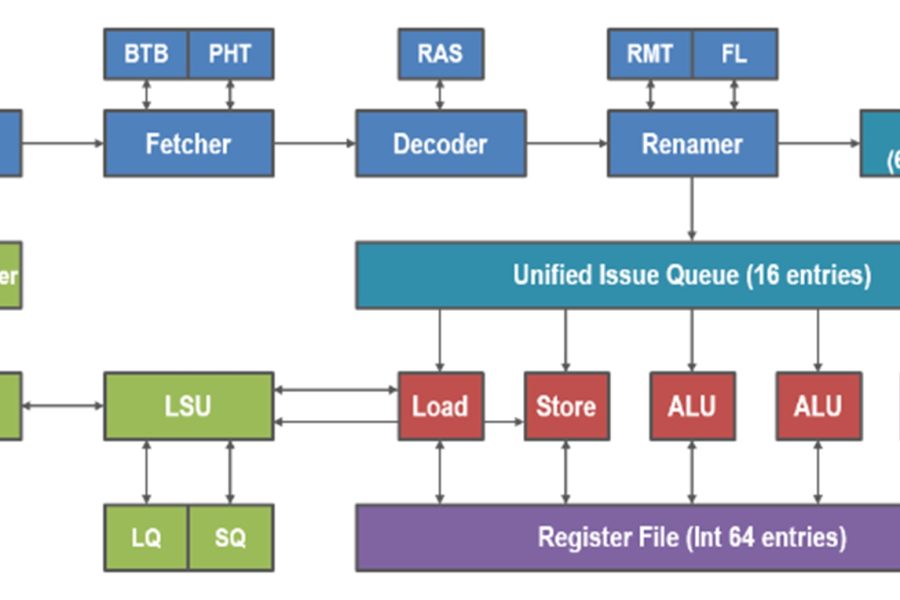
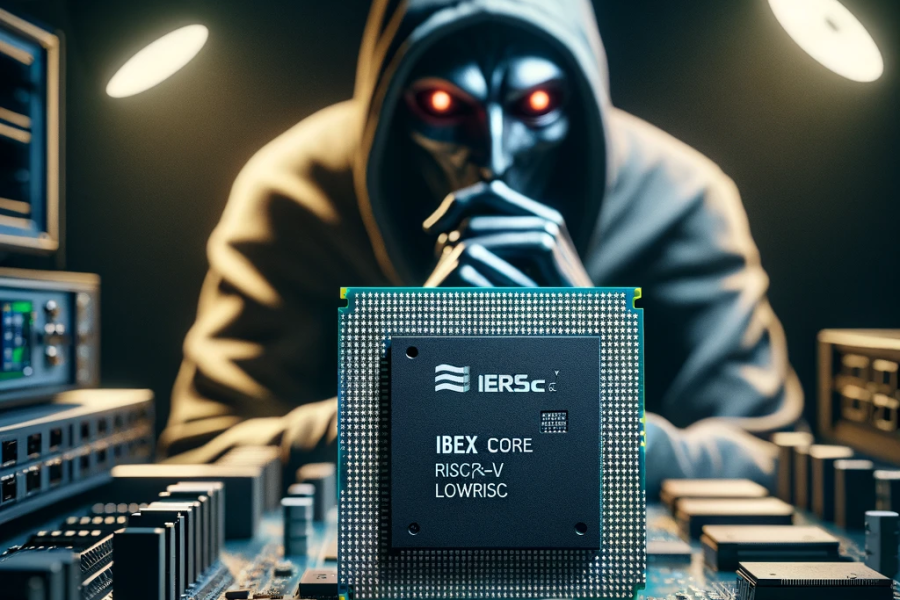
  • A very fast processor is being dealt with, characterized by its aggressive out-of-order (OoO) features, while it remains compact and capable of being synthesized for small FPGAs. The models responsible for identifying branch prediction misses and flushing the pipeline are to be distinguished, and counted upon running a certain test.
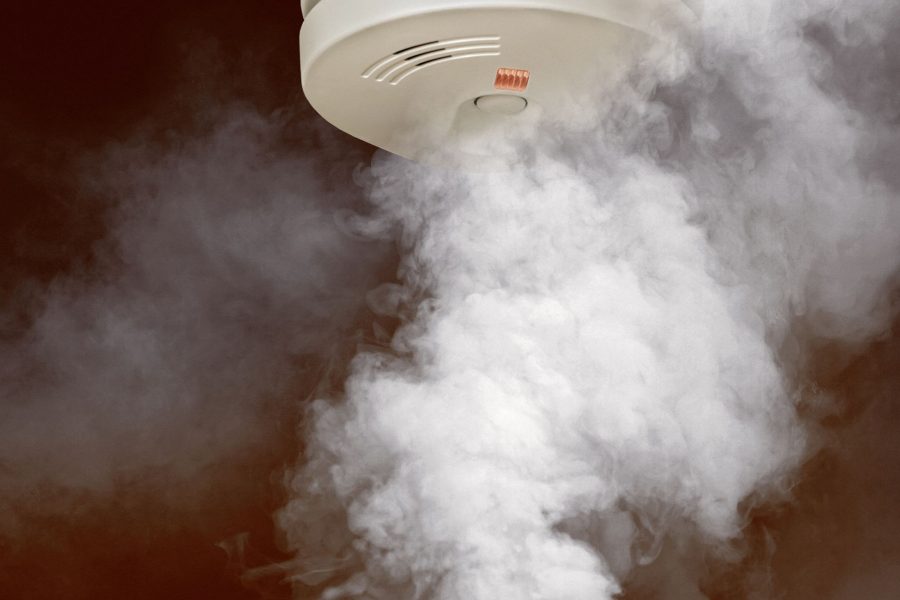
  • The project prevents lithium battery ignition during charging, by measuring the battery temperature and the supplied power. If needed stops the charging and send a notification to the user.
  • A Smart Home system operated through hand gestures, enabling the manipulation of hardware devices solely with hand movements detected by the system.
  • Implementation of an integer image convolution accelerator on an FPGA, with the attempt to minimize space usage and parallelize convolutions for multiple pixels at once, contributing to the overall speed of the processing of a frame.
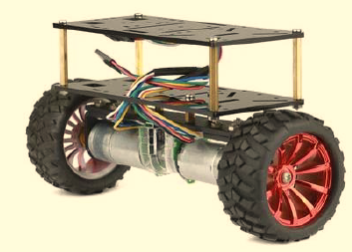
  • Implement a self balancing robot on an FPGA. Dive into system Verilog PIDs, SPI protocols and PWM controllers to self balance a two wheeled device.
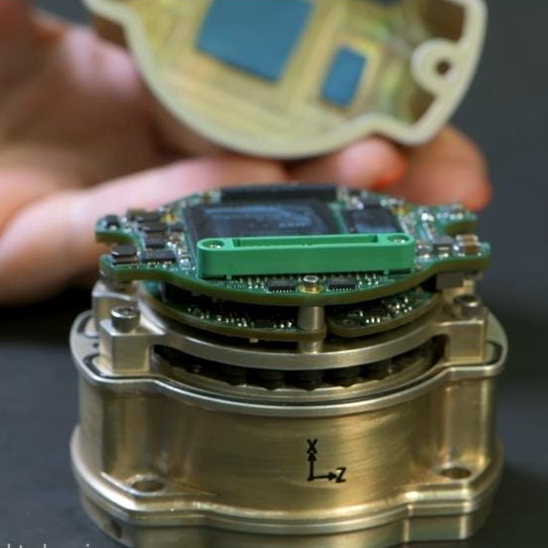
  • Design and implementation of a control system for MEMS gyro while aiming for a mixed-signal ASIC implementation.
  • Building a smart and low-cost electrical vehicle charging station and server. The system supports multiple users and charging stations operating simultaneously. The hardware is cheap and common, and the server operates in a cloud based platform.
  • This project enables dog owners to analyze their dogs' barking to monitor their well-being. It integrates various academic disciplines such as learning systems, signal processing, software, electrical design, and communication protocols, utilizing an ESP32 and a CODEC component with microphone circuits.
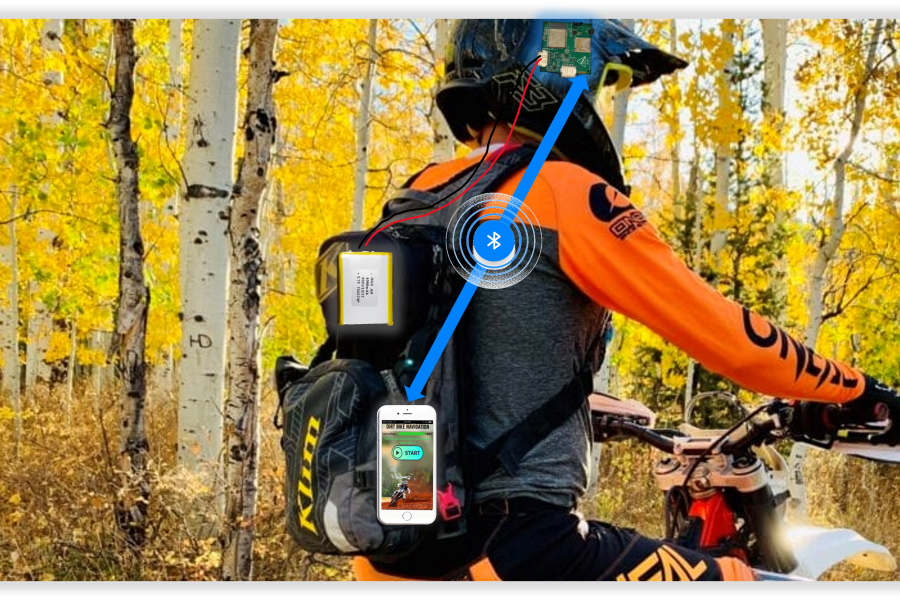
  • A navigation and accident detection system that located on the helmet and designed for off-road riders.
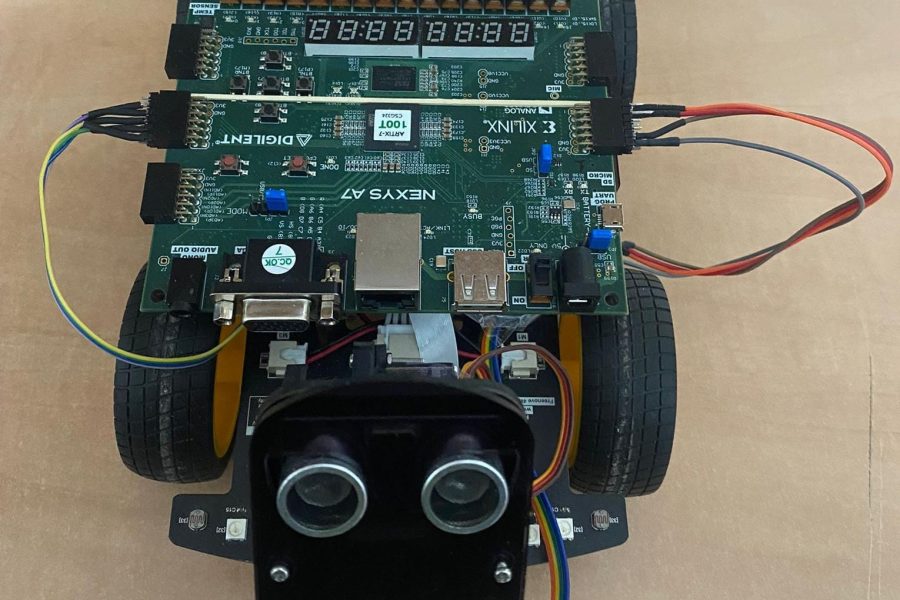
  • Controlling a smart car using an FPGA card. An algorithm was designed and implemented to enable the car to autonomously navigate without colliding with obstacles, follow a dark line, and track a light source.
  • When watching a livestream of a conversation between multiple participants in distant locations, a viewer might observe a delay when the speaker changes. This delay is caused by network latency between the speakers and results in “dead air” in the broadcast - when no one is speaking, therefor hurting the flow of the conversation. This project’s goal is to implement a video editing system that would eliminate this phenomenon by...
  • Hardware description languages (HDLs) and high-level languages (HLLs) serve distinct roles in computer development, with HDLs focusing on hardware specifics and high-level languages on software. DFiant HDL aims to bridge this gap, offering a higher level of abstraction akin to high-level languages while retaining the capabilities of HDLs. Taking an open source project named AD ASTRA, we translated its design to DFiant's abstraction levels, showing that DFiant offers comparable performance...
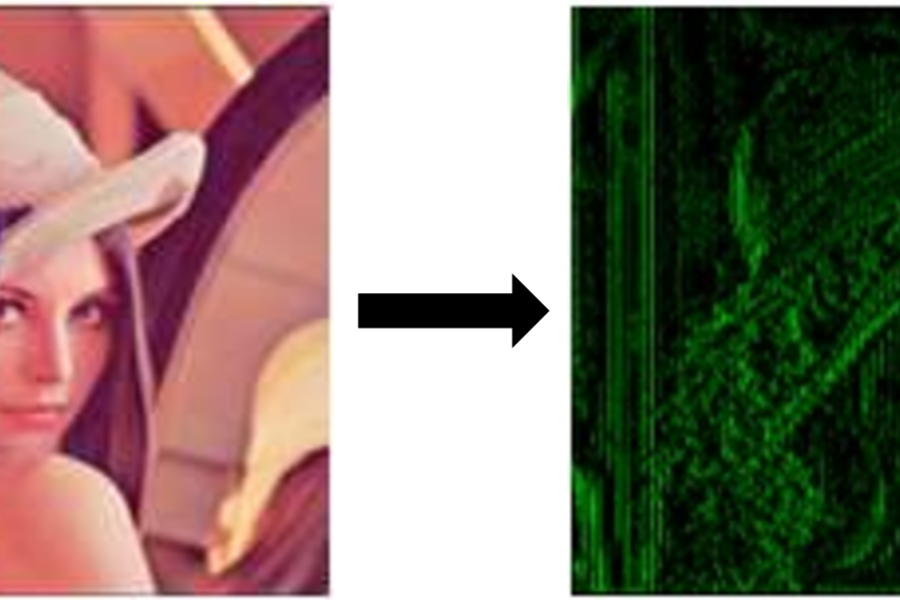
  • Image processing algorithms have the most significant role in digital image processing. Developers have been using and implementing multiple image processing algorithms to solve various tasks, including digital image detection, image analysis, image reconstruction, image restoration, image enhancement, image data compression, spectral image estimation, and image estimation.
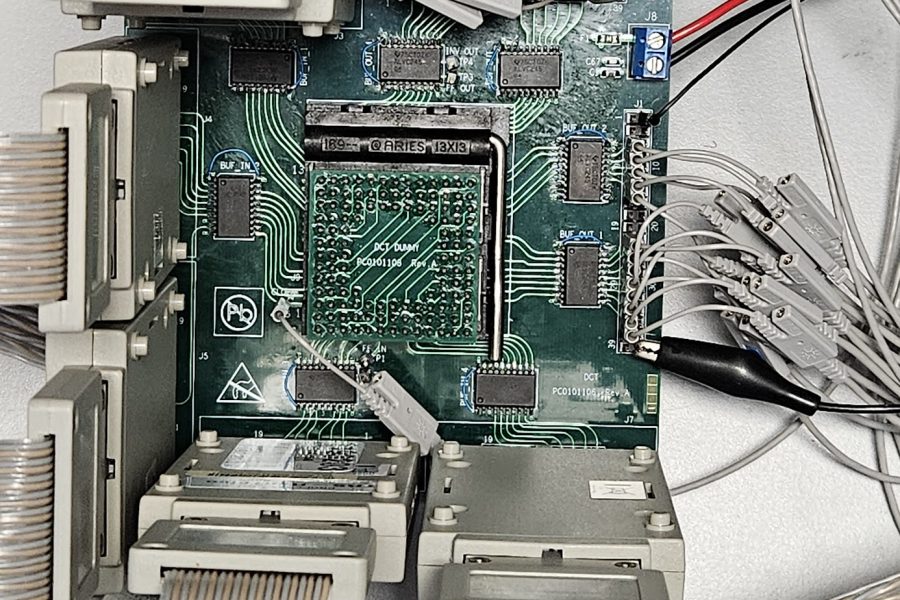
  • Development, production, and testing of a test board intended for the Discrete Cosine Transform (DCT) chip designed by the VLSI lab.The board is equipped with necessary input/output interfaces, isolation buffers and a power distribution network (PDN) to enable accurate and reliable testing of the DCT chip.
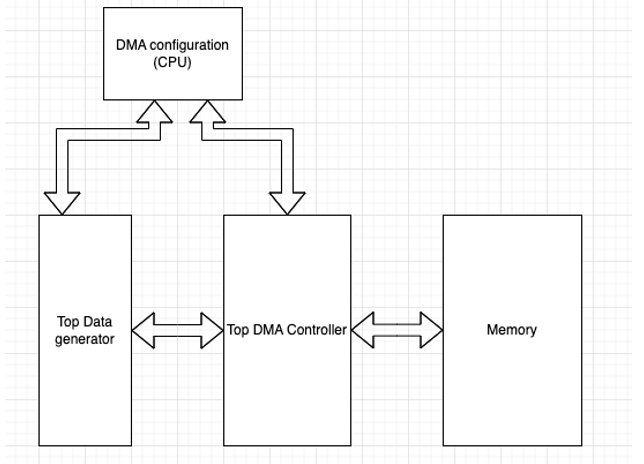
  • Design a controller for an audio device called PMOD. The controller is implemented on a FPGA board and allows users to transfer music from the PMOD device to a memory block on the FPGA board and vice versa
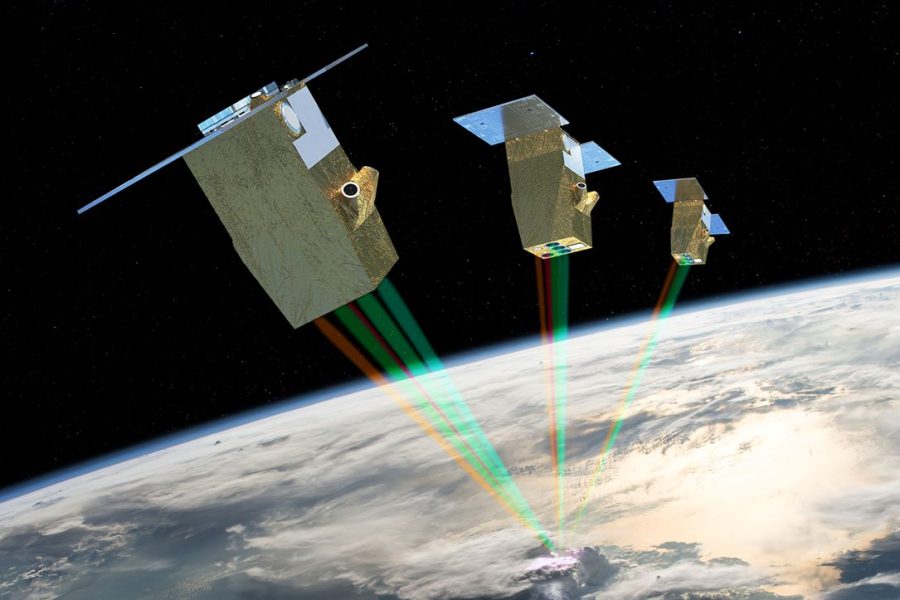
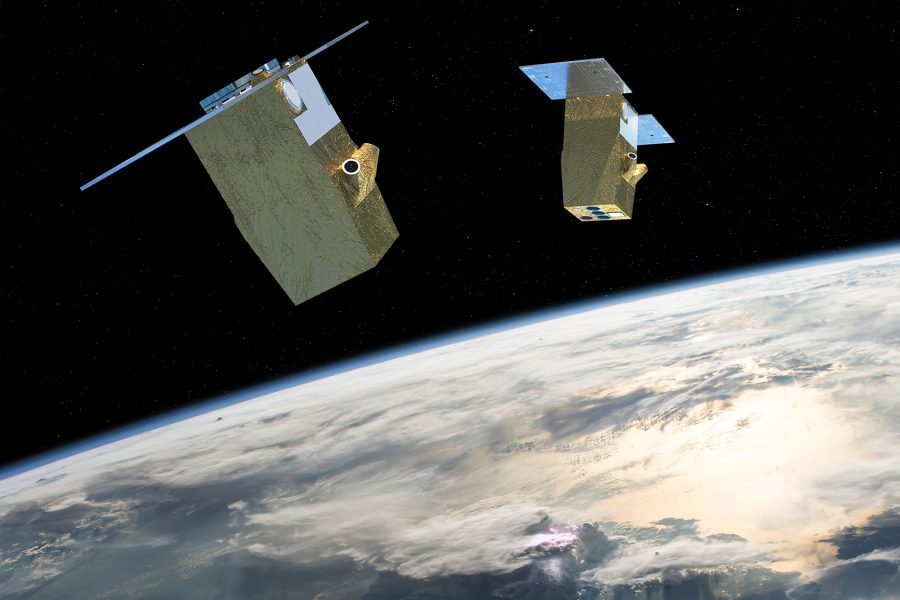
  • Design and implementation of an FPGA-based system dedicated to lightning detection within high-speed video streams. This system effectively emulates a satellite processor,focusing on identifying lightning and economizing memory by storing only relevant, lightning-related data. Our objective is to enhance lightning detection with significant time and spatial precision while operating with limited memory resources.
  • This project converts a SystemVerilog implementation of the Game of Life to DFiant HDL, a hardware description language. It showcases the capabilities of DFiant HDL, compares it with SystemVerilog in terms of readability, and performance and provides feedback for language improvement.
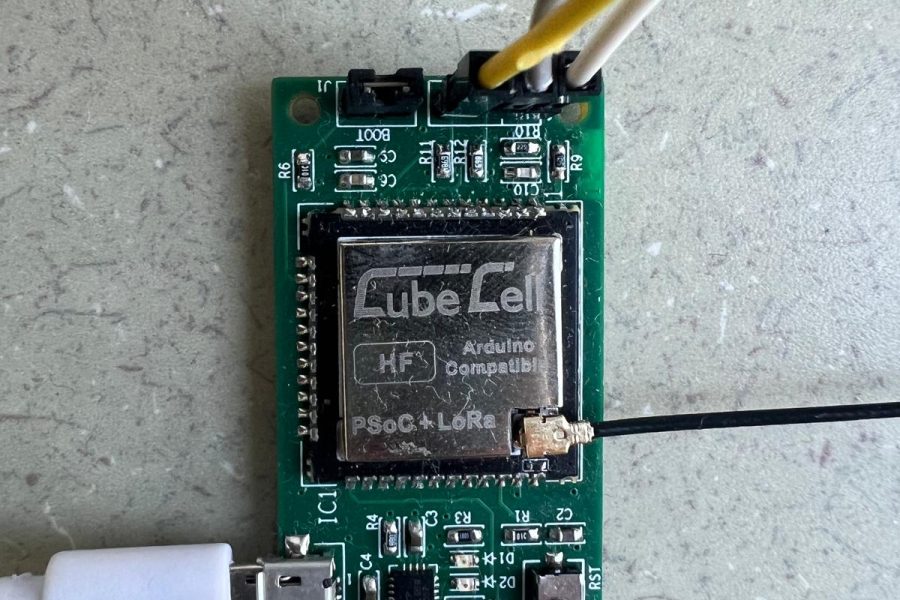
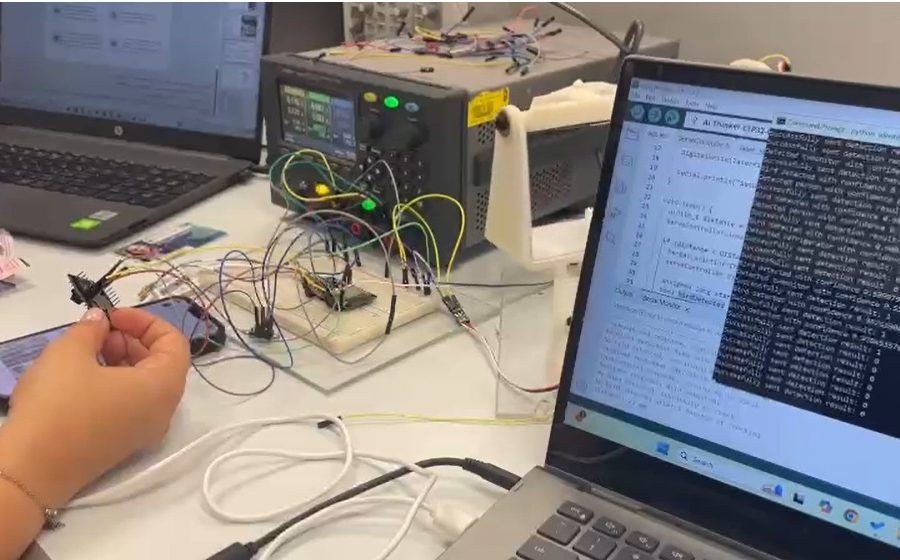
  • A top (aka dreidel) is a common toy which spins rapidly. The main goal of the project is to design and implement a synchronization system for such a top. i.e., a real time system to indicate the current angle that the top is facing while it is spinning. This solution it to later be used to synchronize different operations.
    Categories:
  • This project mitigates Fault Injection (FI) attacks on system-on-chip (SoC) modules by introducing redundancy in the Advanced Encryption Standard (AES) module. By statistically verifying that simultaneous successful attacks on both redundant modules are improbable, it uses this comparison approach to detect and neutralize FI attacks. The results show the effectiveness of this redundancy approach in bolstering hardware security.
  • As of today, stray cats struggle to find a reliable source food on the streets. Therefore emerged the idea of providing them a food station which is a simple but meaningful way to make a positive impact on their lives.
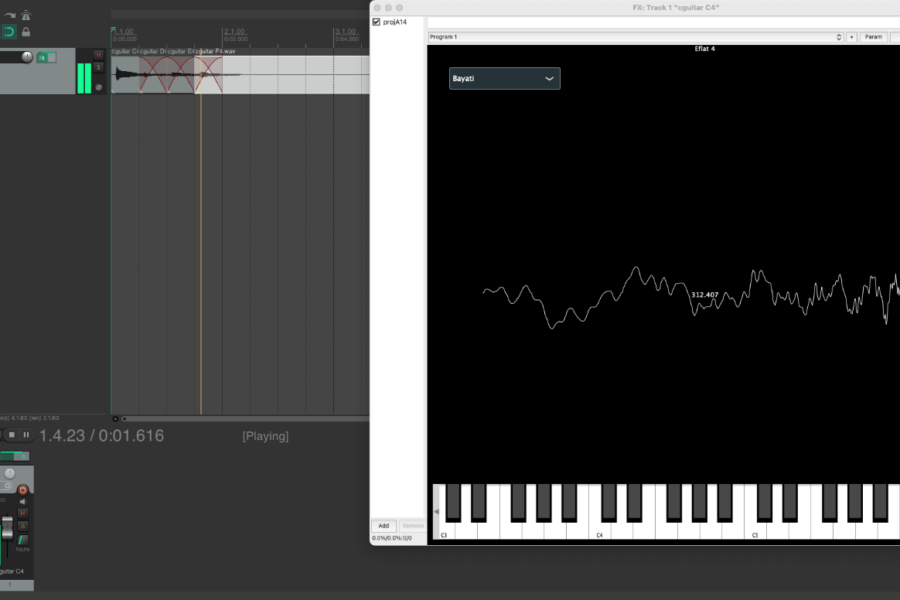
  • Developing a VST plugin using the JUCE framework that enables real-time playing of Arabic maqam on Western instruments, promoting cross-cultural musical collaboration. By bridging cultural boundaries, this plugin allows musicians from diverse backgrounds to explore and create music together.
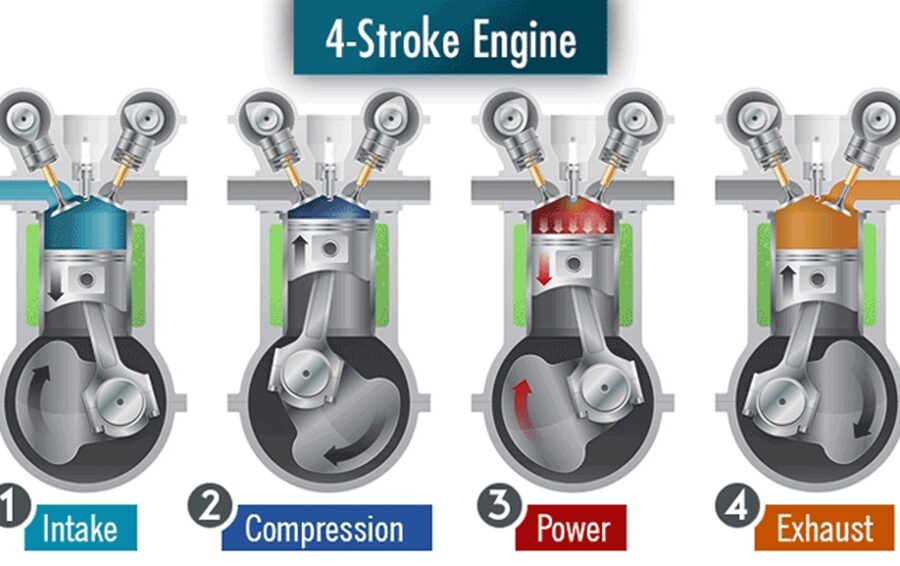
  • Implementation of a micro-controller that controls for the speed, temperature and vacuum, and optimises the ignition timing in every cycle according to the values measured on a designated PCB
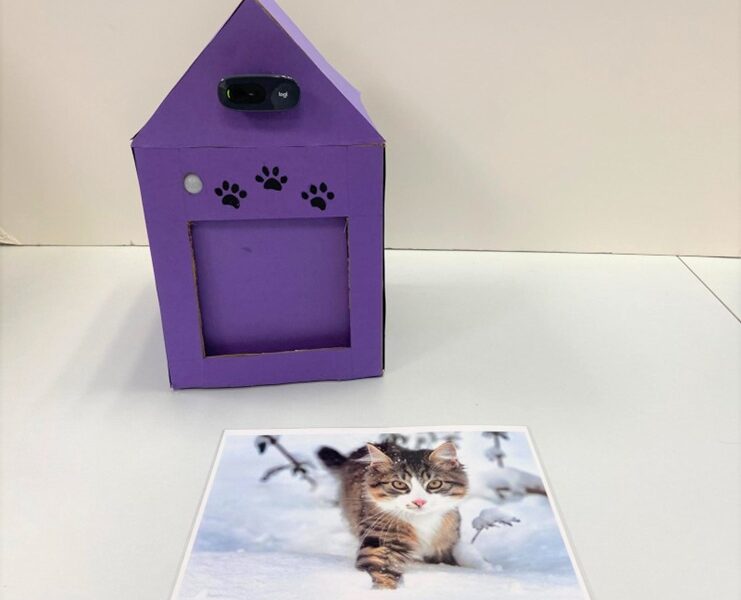
  • A low power and low-cost prototype for a community cats feeder. It consists of different sensors and hardware, and an object detection algorithm, that will detect cats and avoid other animals.
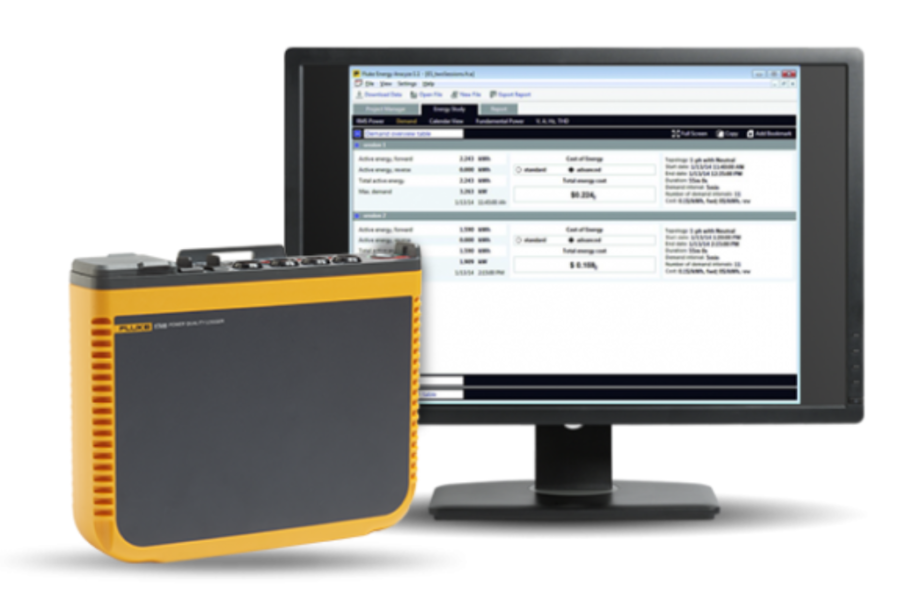
  • This Arduino-based power logger project aims to measure and monitor voltage and current data over time, allowing for easy analysis of power usage patterns. With the ability to sample information at regular intervals, the device automatically tracks changes in voltage and current, generating clear and concise graphs that illustrate power consumption trends. The user-friendly interface makes this project accessible and easy to use for anyone looking to better understand their...
  • Frequent need to press the clutch can be a source of physical strain and fatigue for a dirt bike rider. To address this issue, a system has been developed that uses sensors and a servo motor that assist him in this action and reduce the burden on the rider.
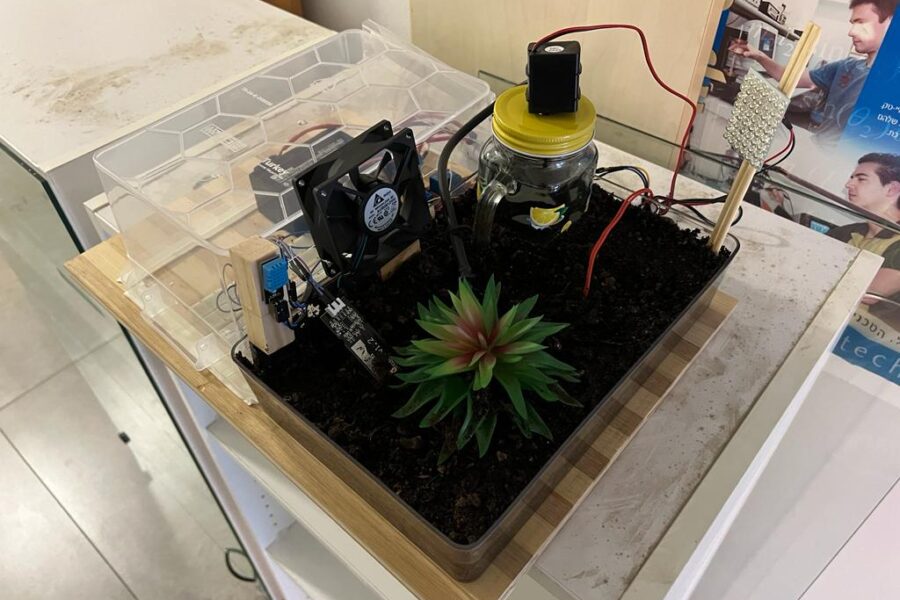
  • An automatic, ESP32 based, plants growing system, based on real time data gathering with on-site multipurpose sensors and active components.
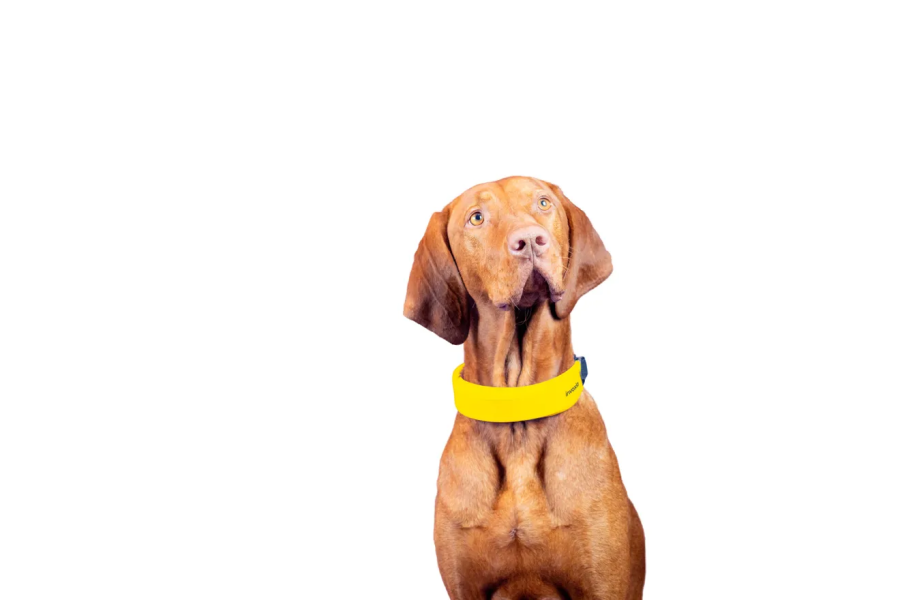
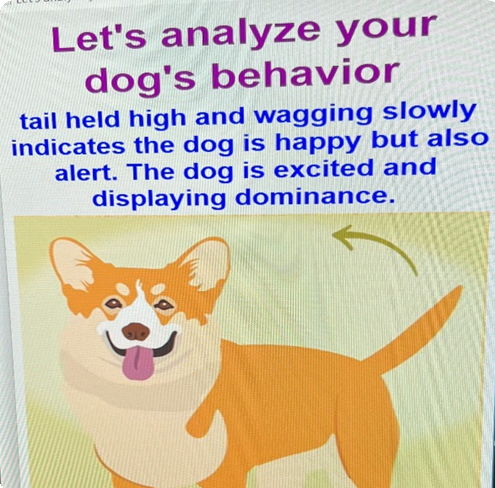
  • Help dog owners better understand the behavior and feelings of their dog by analyzing the movement of its tail.
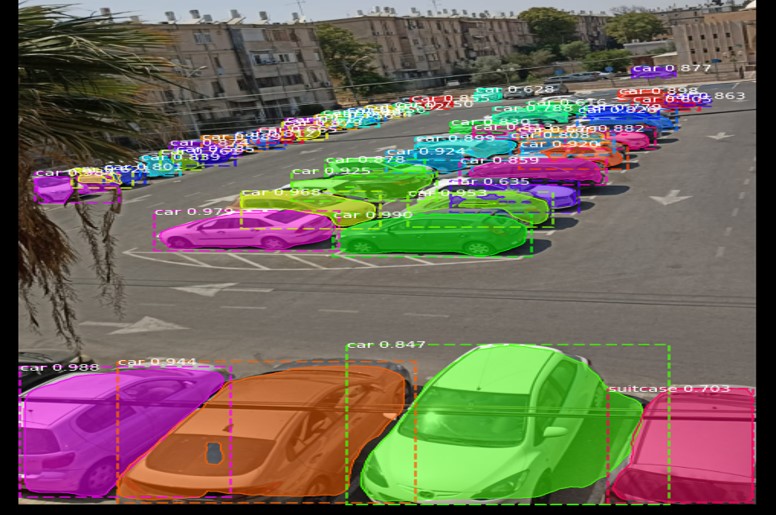
  • Help users find available parking spots in a specific area. Implementation of a backend software interface for a parking detection system that uses MASK R-CNN neural network and additional logic based on the segmentation output of the network.
  • This project aims to establish a viable, reliable and easy to implement IR communication using basic LED and Photodiode. The communication follows the RC-5 protocol invented by Philips and can be further used as a remote for devices such as TV screens and air conditioners created by Philips.
    Tags: |
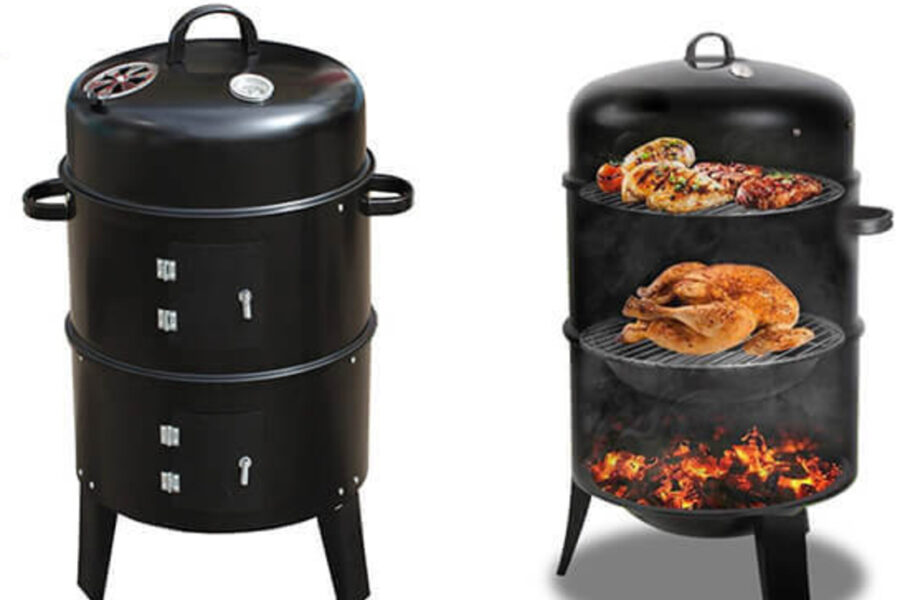
  • Implementation of a simple and intuitive graphic user interface for a smoking automatization system created in the first part of the project. The above system is a modular universal system to control the smoking process of foods automatically to provide a more pleasant experience of smoking for the user and spare the need in manual interference.
  • Design and implementation of a hamster wheel than can charge a phone. The charging circuit can be controlled and monitored by an app, using Bluetooth.
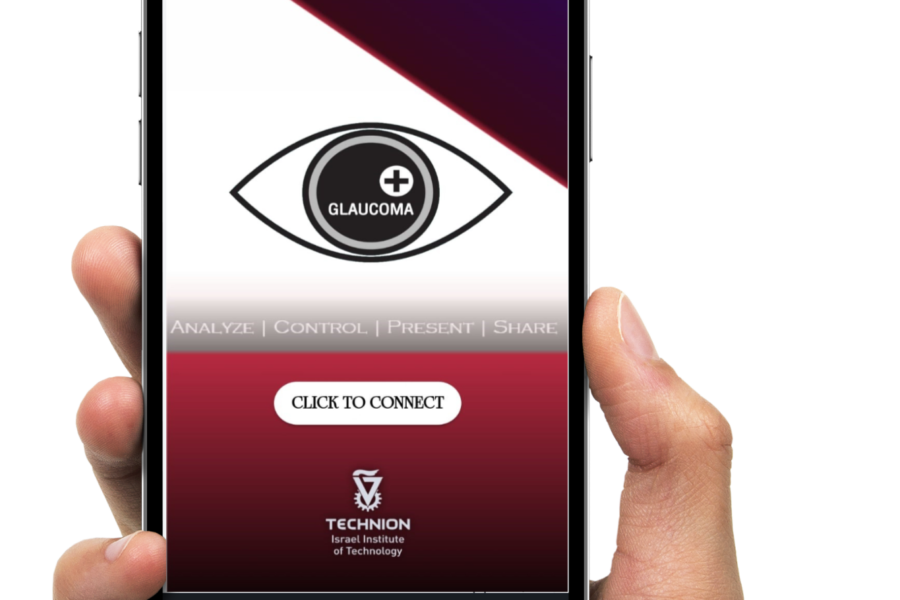
  • In this project two software applications were developed (Android and Arduino apps). Both apps are designed to be used to control and operate the Glaucoma device and to display the results on an Android device.
  • An automatic Nitrite concentration testing machine for tracking nitrite concentrations. The machine includes a water pumping system, a stirrer and a colorimeter. The machine checks the Nitrite concentration in the water every few hours without intervention from the user
    Tags: |
  • This project's goal was to built a system based on ESP32 and Android application, that sends notifications between vehicles, which are not in each other's line of sight, as well as collecting data on driving. The application is able to present graphical data to the driver.
    Tags: | |